I find that writing helps me think. It calms my mind hence my nerves before I feel particularly anxious. It may not work all the time, it does work most of the time.
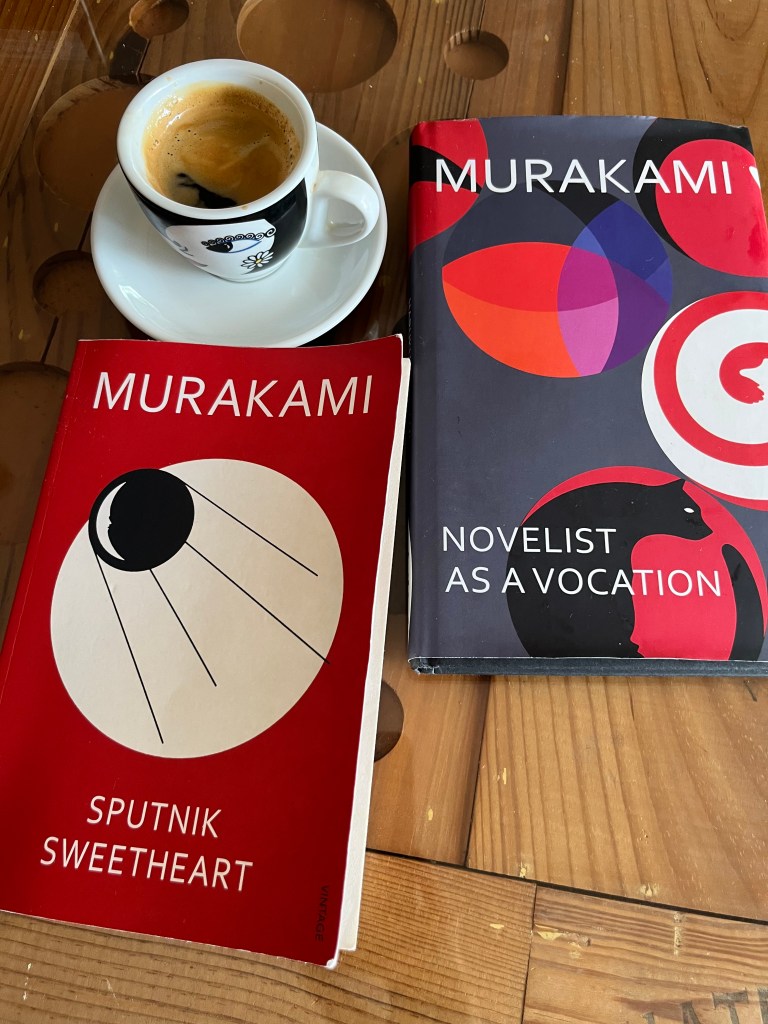
I’m currently reading Haruki Murakami‘s memoir on writing. In Novelist as a Vocation ,Haruki Murakami translated from the Japanese by Philip Gabriel and Ted Goossen, the writer shares his thoughts on being a novelist. Murakami did not have his heart set on becoming a novelist when he was young. The vocation as a novelist found him. He studied theatre at the Waseda University in Tokyo in the late 1960s and he was already married and working at a young age.
At the material time, Murakami was running Sendagaya jazz café with his wife in the basement of the building near Kokubunji Station’s south exit. One day, it hit him that he was pushing thirty.
On a bright afternoon in April 1978, Murakami caught the writing bug at a baseball game held at Jingu Stadium in downtown Tokyo. ‘It was the Central League season opener, first pitch at one o’clock, the Yakult Swallows against the Hiroshima Carp.’
He was out for a stroll. The stadium was close to his apartment. The idea of becoming a novelist simply struck him as he was sitting on a grassy slope , the sky as a sparkling blue, he was stretching out with a cold draft beer and ‘the ball strikingly white against the green field, the first green I had seen in a long time‘.
Haruki Murakami writes in his memoir :
‘ I think Hiroshima’s starting pitcher that day was Satoshi Takahashi. Yakilt countered with Takeshi Yasuda. In the bottom of the first inning, Hilton slammed Takahashi’s first pitch into left field for a clean double. The satisfying crack when bat met ball resounded through Jingu Stadium. Scattered applause rose around me. In that instant, and based on no grounds whatsoever, it suddenly struck me : I think I can write a novel.‘
Murakami then set out to write ‘Hear the Wind Sing’ and his first manuscript won the Gunzo Prize for New Writers. Amazing.
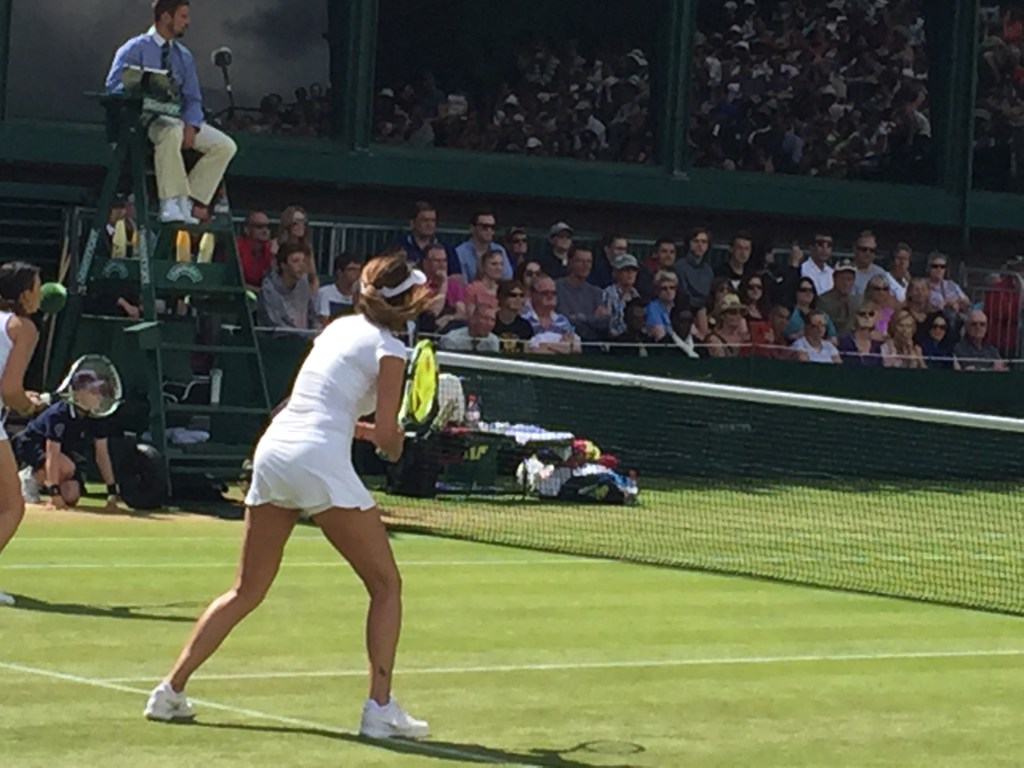
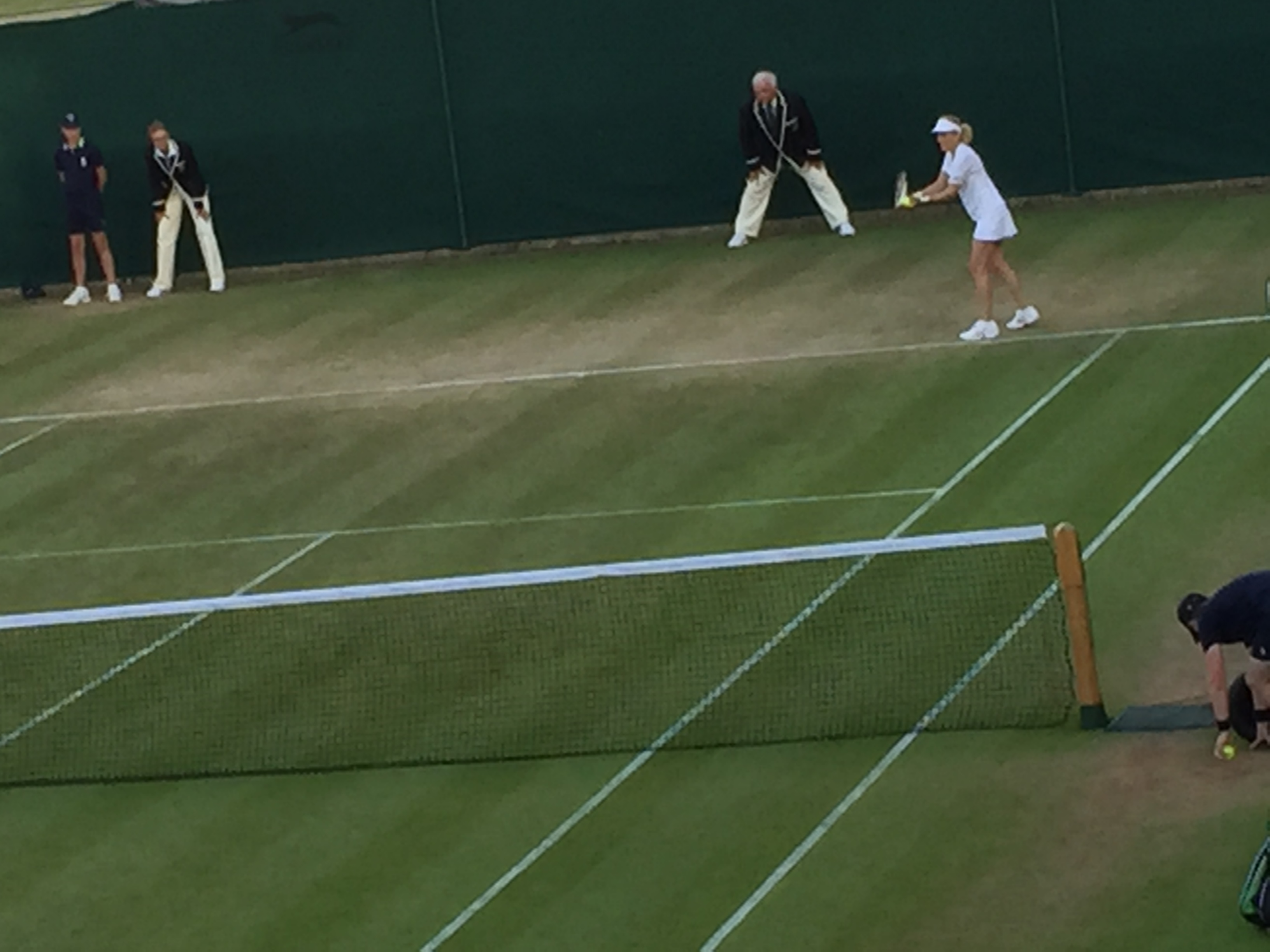
I know nothing about baseball. I have truly enjoyed the experience of being present at live tennis matches. It was pure joy when I managed to catch the semi final between Roger Federer and Novak Djokovic at Shanghai Rolex Masters in 2010. I was overjoyed when I made it to Australian Open one January many years ago. It was another dream come true as I walked around Wimbledon arena and caught some of the tennis action around the courts at Wimbledon one Tuesday morning in July 2015. I had strawberries and cream, sitting on the grass smelling the summer air, soaking up the sun and all that tennis energy. I did not have an epiphany but the experience was magical. Sparkling white is great colour for tennis attire against the green lawn. The players make perfect pictures as they are caught in action with the green backdrop.
Sputnik Sweetheart by Haruki Murakami was one of my reads in July. It is only 229 pages long. The fiction is translated from Japanese by Philip Gabriel.
Sumire, aged twenty-two, is in love with Miu, a woman seventeen years her senior. She quits college as she aspires to write.
Sumire spends hours on the phone talking to K who is clearly in love with her. K wonders if he should confess his own unrequited love for Sumire. When Sumire is offered a job as Miu’s assistant for her wine import business, she accepts it.
The story is narrated in K’s voice.
‘At the time, Sumire—Violet in Japanese—was struggling to become a writer. No matter how many choices life might bring her way, it was novelist or nothing. Her resolve was a regular Rock of Gibraltar. Nothing could come between her and her faith in literature.‘
– Spunik Sweetheart, Haruki Murakami
This is how K describes Sumire:
‘ Sumire was a hopeless romantic, a bit set in her ways – innocent of
the ways of the world, to put a nice spin on it. Start her talking and she’d go
on nonstop, but if she was with someone she didn’t get along with – most people
in the world, in other words – she barely opened her mouth.’
There is a bond between Miu and Sumire but it is not the kind of love Sumire seeks. When Sumire accompanies Miu to Europe for work, she keeps in touch with K through phone calls and letters. Sumire and Miu go to a remote island in Greece after they are done with their work. One day Miu calls K to say that Sumire has vanished from the island and K travels to Greece to help find her. K looks through Sumire’s room and finds a floppy disk that contains two documents. Sumire’s writing is cryptic.
‘Except for a few letters, it’s been a long time since I’ve written something purely for myself, and I’m not very confident I can express myself the way I’d like to. Not that I’ve ever had that confidence. Somehow, though, I always feel driven to write. Why? It’s simple, really. In order for me to think baout something, I have to first put it into writing.
It’s been that way since I was little. When I didn’t understand something, I gathered up the words scattered at my feet, and lined them up into sentences.If that didn’t help, I’d scatter them again, rearrange them in a different order. Repeat that a number of times, and I was able to think about things like most people. Writing for me was never difficult. Other children
gathered pretty stones or acorns, and I wrote. As naturally as breathing, I’d scribble down one sentence after another. And I’d think.’
– Sputnik Sweetheart, Haruki Murakami
Magical realism is Haruki Murakami‘s signature style of writing. Things are not what they seem. Things do not always make sense.Murakami‘s prose is straightforward but his story is whimsical, surreal and cryptic.
Incidentally here is a passage from Murakami‘s foreword in Novelist as a Vocation :
‘The last thing I’d like to note that I’m not the kind of person who is very good at thinking things out purely using my mind. I’m not that good at logical argument or abstract thought. The only way I can think about things in any kind of order is by putting them in writing. Physically moving my hand as I write, rereading what I write, over and over, and closely reworking it – only then am I finally able to gather my thoughts and grasp them like other people do. Because of this, through writing over time what’s been gathered in this volume, and rewriting it over and over, I’ve been able to think more systematically and take a broader view of myself, a novelist, and
myself being a novelist ‘
l get the feeling that the writer was describing himself when he described Sumire’s musings about writing in Sputnik Sweetheart.

 Bookaholic Macchiato
Murakami is wonderful. I read his “What I Think about When I’m Running” to get insight into his nonfiction mind and life story. I didn’t know he hand written another one on writing. Cheers.
LikeLike
Hi Lani Thanks for reading the post. I enjoyed reading What I Talk About When I Talk About Running by Murakami. The writer is the kind of person who totally commits to whatever he does, this is demonstrated by how he focuses on his writing and running and sharing with us his musings and insights.
LikeLiked by 1 person
Yes, that’s a great way to describe him. 😀
LikeLike