
Have you ever wondered about the path not taken? Sometimes I do just for the sake of imagining life elsewhere or a different career choice. After graduating , I came home while most friends whom I was then close to settled down in Australia. Home might have provided a safe environment but it might not have been the space to figure things out. At one point , to my parents’ dismay, I moved out of home to share a house with friends. As an Asian, you do not move out of your family’s house when you are not married. It was the eighties. As most young people lived at home then, our shared house became a popular place where acquaintances and friends gathered around to read plays and held social exchange. While it was great to have interesting people coming, staying and leaving our shared house, there were too many distractions and I could not rest well. None of us was into cleaning, and I found domestic work tedious. When one of the flatmates, a foreign student was due to leave after finishing her postgraduate studies, the remaining flatmate and I decided to move back home. I had already started working as a junior lawyer and I needed some kind of order in my life then. If I knew what I know now, would I have done things differently? I think I probably would choose a career path to do with books or some creative work. Nonetheless as a pretty much live in the moment kind of person with no specific plan , I am grateful for the opportunities that I have had mostly by default. I have gained various insights about life through legal work and people I meet from time to time. If you enjoy stories, you definitely come across plenty of stories as a legal practitioner.
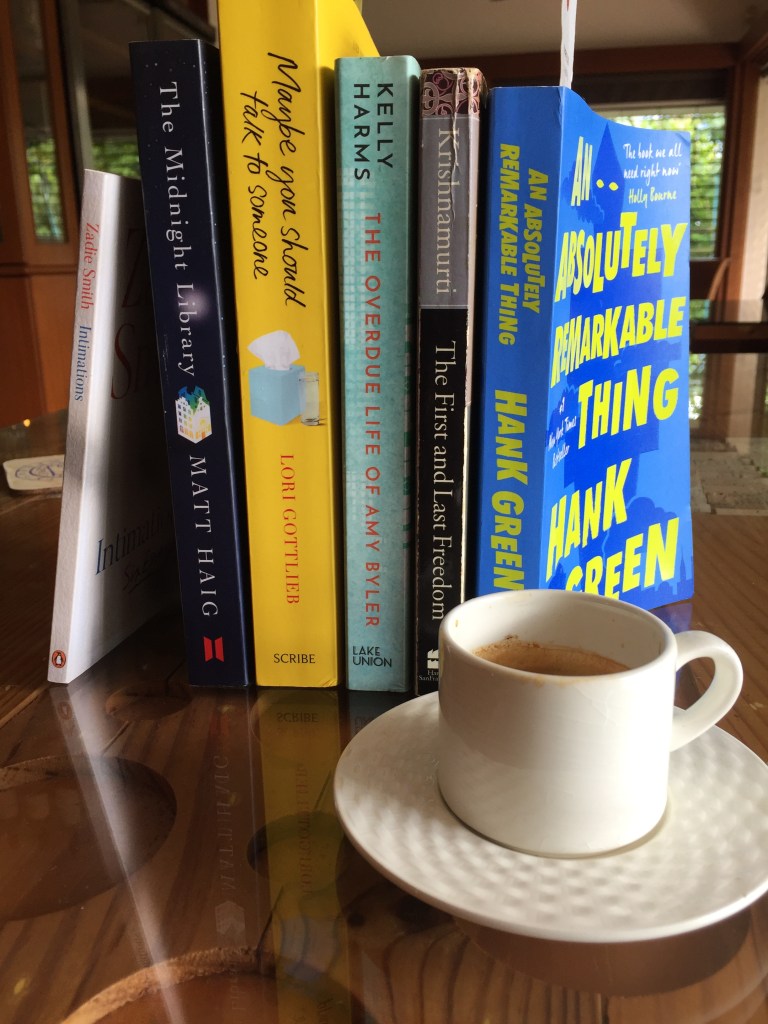
I normally do not leave a house without carrying a physical book with me except when I’m dining out with friends or family. Even then, if I could fit a book into my evening purse, I probably would too. Books are somewhat my comfort zone and I love a conversation about reads anytime. Reading helps me to relax and through reading I am able to relate to a larger human experience and understand the human psyche better. I am constantly amazed at published writers who have managed to imbue with words the nuances and complexities of life. These writings cleverly capture the capricious nature of human beings and trappings of the world. One of the writings that I am drawn to are memoirs where the authors share their journeys in pursuing their passions, particularly those memoirists who knew what they had wanted to do since they were young.
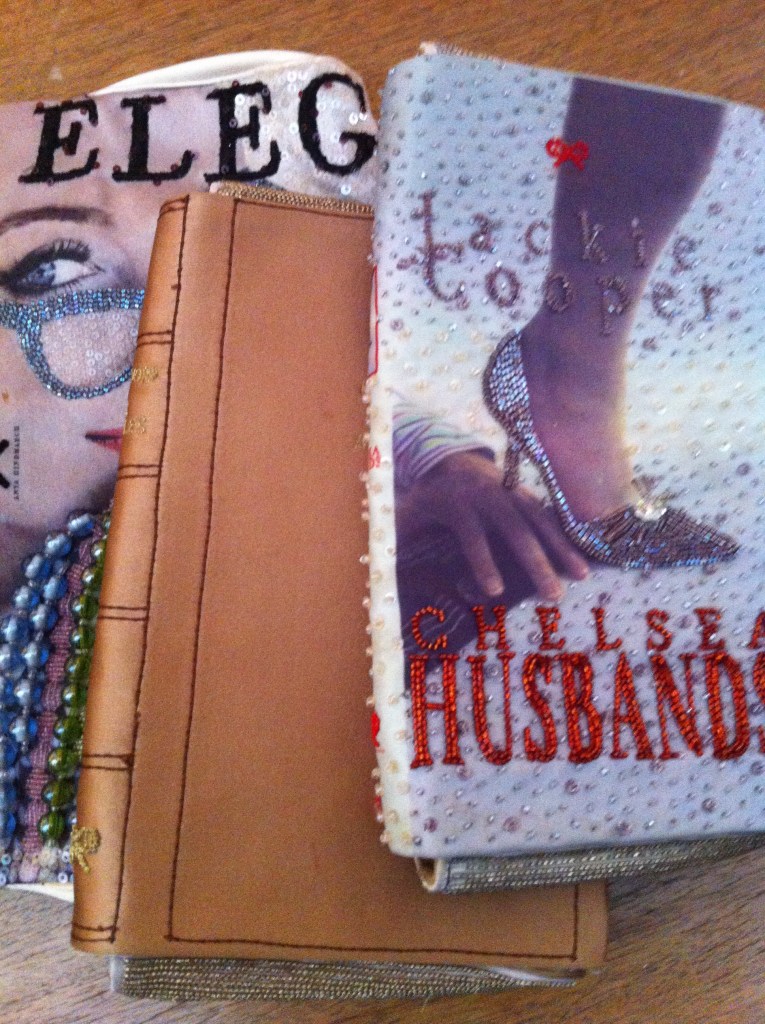
Over the years, I have acquired far too many bags that bordered on the side of excess . But I absolutely adore this collection by Anya Hindmarch, the London based bag designer. As a book lover, I could not resist when I chanced upon these evening bags that are in the shape of magazine and books. At fifty-two Anya Hindmarch took stock of her life and reflected. In her memoir If in doubt wash your hair that was published in 2021, the designer shares her tips and learnings as an entrepreneur, business woman, designer and a mother of five children.
Hindmarch writes, ‘Having hit fifty, I suddenly felt I had a lot to say. Not because I have always got it right, but mostly, actually, because I haven’t.’
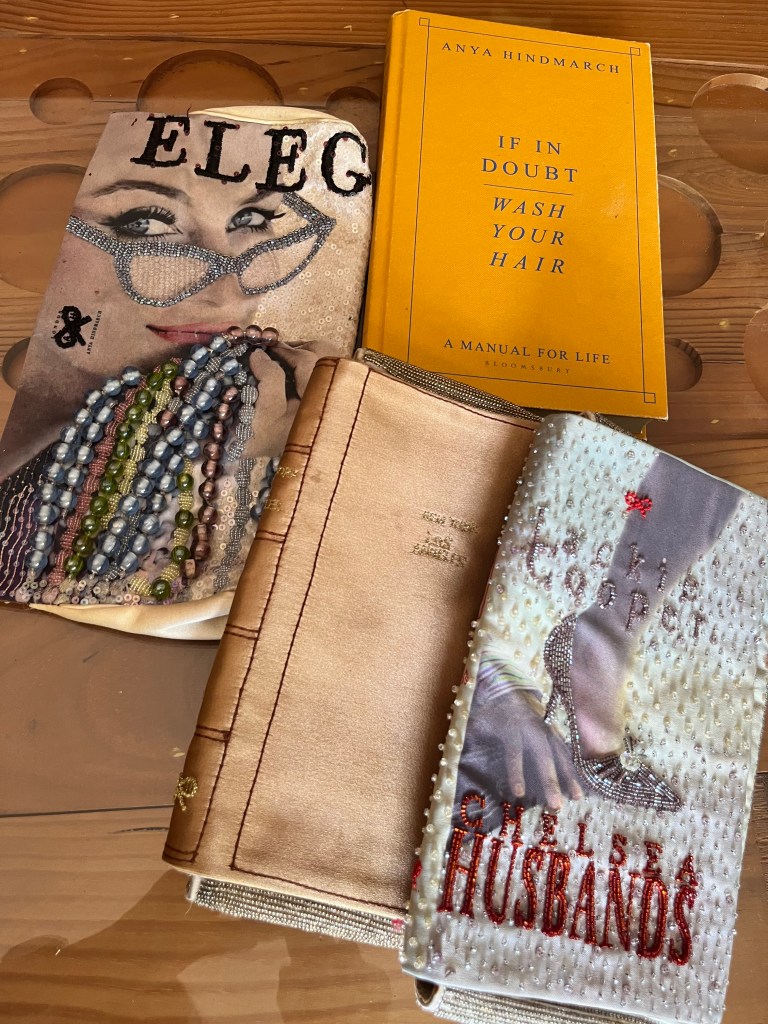
Anya Hindmarch refers to a quote attributed to Oscar Wilde.
‘Be yourself; everyone else is already taken.’
This is so true. But if you think about it, we all share similar fears, likes and dislikes and human psyches are not entirely that different amongst individuals yet everyone of us is unique in our own ways.
‘I think we all have different versions of ourselves that we get out for different occasions, to respond to different situations. ‘ Anya Hindmarch writes in her memoir.
She also writes that she is a borderline introvert/extrovert and she has found and made peace with her core , most true self.She has found her ‘happy place’ where she is ‘not trying to be more entertaining, or tougher, or braver‘ than she feels she can naturally be.
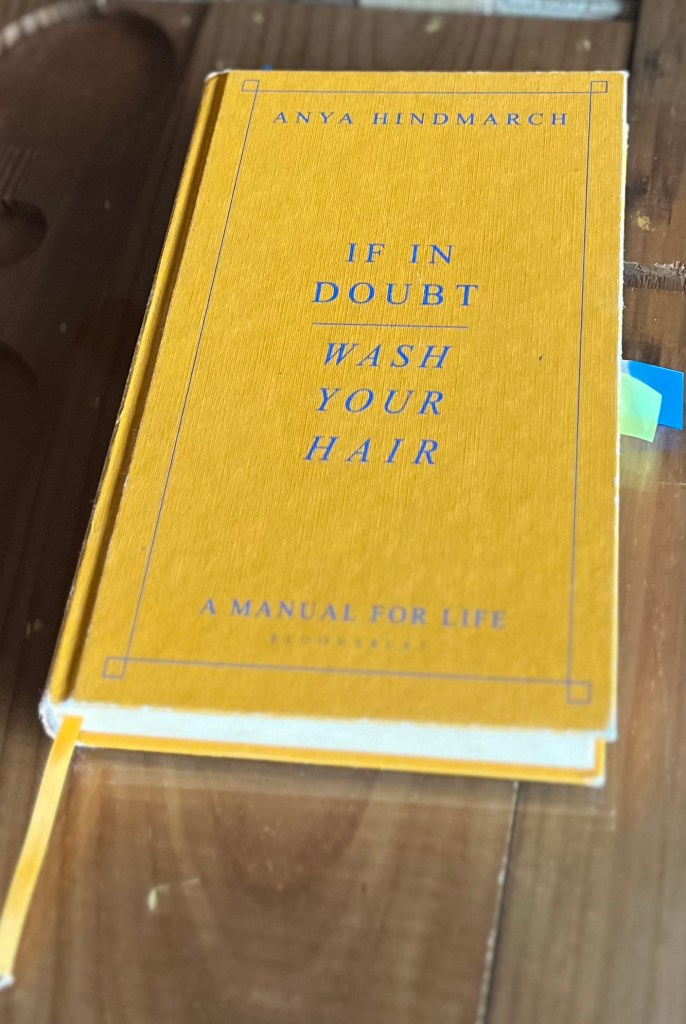
As a mother of five children, Hindmarch writes:
‘Five children later, and mostly getting it as wrong as I’ve got it right, there is one crucial role a parent has to play that I wish I had known about earlier. I was always ambitious for my children. I wanted them to work hard and do well and achieve, and so I thought my role was to push them and even may be tough on them occasionally. But something I believe now that I didn’t appreciate when I started out is that, actually, if you just love your children to bits and make them feel incredible and confident then that is the greatest gift you can give them.’
‘It’s not wrong to be besotted by our children. It’s not wrong to make them feel like they’re fabulous people. It’s our duty. It’s our job.’
I agree with her that as parents, we have to instil in our children the confidence to live the life they envisage for themselves. We also must trust that they have the sensibility and creativity to navigate challenges, various opportunities and options available and make the decisions they believe are right for them.

Hindmarch belongs to a ‘transitional generation’ in which women are trying to live up to their mother’ examples and are also working as hard as their fathers. In her generation, ‘women still tend to end up with the lion’s share’ of the childcare, the housework, managing school dates, school runs, et cetera. Hindmarch’s husband understands the need for change but they are often stuck playing the traditional roles as she is still trying to live up to her own mother’s example.
Anya Hindmarch had started a business at eighteen.
‘When I was about sixteen, a girl who had recently left the school came back to talk about her career in fashion. Afterwards I went back to my desk and I sketched a shop full of handbags, with me standing outside it and my name on the door. It was my way of saying to myself: This is what I want to do.‘

Two years later, she had left school and she went to Florence to do a two-month course to learn Italian. At that time she also learnt about the craftsmen and the leather market and the factories.Seven years later, she opened her first store on Walton Street selling bags with her name on it. She loves the combination of artistry,technical nous and obsessive dedication.
Hindmarch writes that she has accepted her slightly dyslexic brain. She did not thrive at school, but she loved music. As a young teenager, she had wanted to be a singer but she had a terrible stage fright. Her music teacher had to stop playing.She does not remember what happened afterwards but it was embarrassing for everyone. That was the last time she sang in public. Later in life she also could not do any public speaking as she had been traumatised by her failure to sing in public. She managed to overcome her fear by seeking help and after one session of therapy she successfully fixed the problem. Her therapist William Scott-Masson : ex army officer, professional actor and NLP practitioner told her to replay the incident in her mind in Mickey Mouse voice instead of a human voice, to see it in black and white. He asked her to think it in reverse…. After all kinds of visualisation and audio exercises, with the idea of replacing the incident that had less power over her. William told her that fear and excitement are actually the same emotion.’ The power of the brain is phenomenal. Willian flipped a switch. Fear is just excitement.‘

Anya concludes her memoir by saying :
‘As I look ahead to the next ten years, I am brought back, often to the ants. Life is just an ant wiggle. We are all just wiggling our way from the beginning of our lives to the end and trying to do the best we can. The wiggling feels like it matters dreadfully, but ultimately not a lot of it really does.I would love my wriggling line to leave a bit of a mark, to make a difference. I am up for trying. But what really matters is to be healthy, to be kind, and to pass that baton well.‘

If in doubt wash your hair by Anya Hindmarch is a charming read.
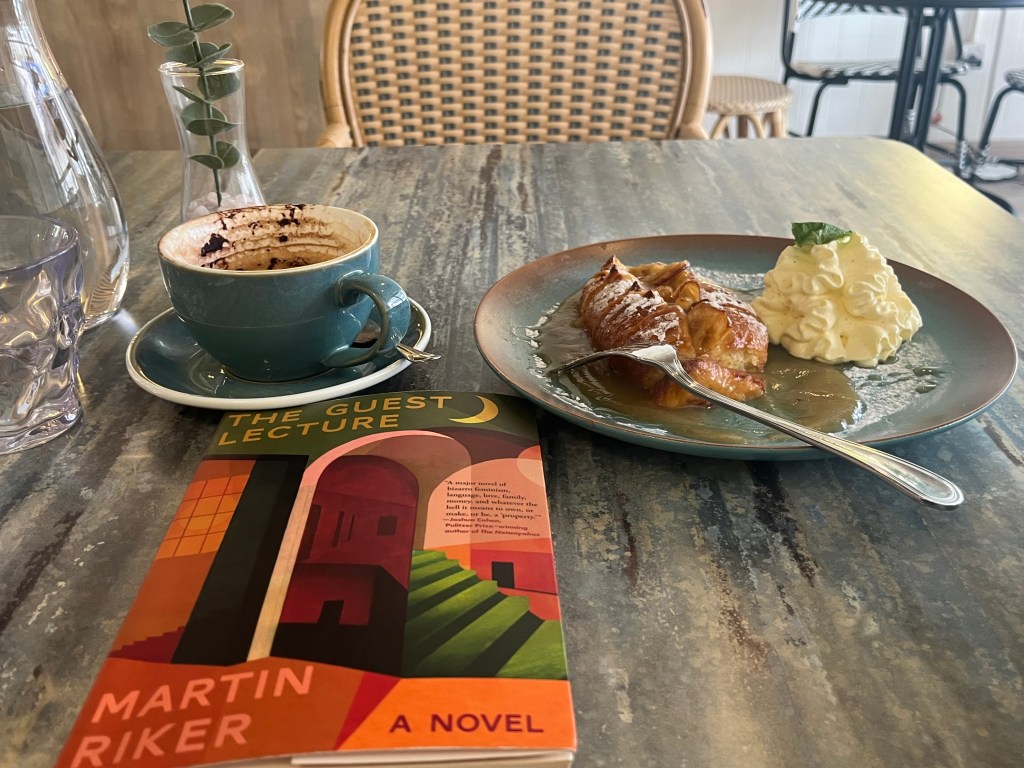
The Guest Lecture by Martin Riker is a fiction about Abigail, a disillusioned feminist economist reflecting on her life as she lies awake next to her husband and daughter in a hotel room. She is feeling anxious because she is presenting a talk on optimism, utopia and John Maynard Keynes the next day and she is grossly unprepared. She has been denied tenure by the university where she teaches and she has to confront the uncertain future that lies ahead. Her failure to secure tenure is possibly attributed to sexism in academia.
I do not understand economics and certainly know nothing about Keynesian economist theories. From the narratives, Abby regards Keynes as ‘father of macroeconomics’ and promotes his moral and humanistic principles for a better world. She has recently published a book on Keynes who had written his essay “Economic Possibilities for Our Grandchildren”.
Quite often for me things happen by default thus I can relate to Abby, the protagonist in the novel. Abby laments that her course through life is a series of coincidences. In her struggle to rehearse her lecture, her insomnia self looks into her past; as she reminisces about her youth and long forgotten moments ,she recalls the connections and people whom she met and how she has ended up where she is. In her imaginary conversation with Keynes, she is painfully aware of her bleak future. Her mind is like a runaway train moving from self-deprecating thoughts, wry memories and questions about Keynes’s theories.

‘ In a Keynesian utopian alternate dimension, what would you do? With your time, while robots are taking care of your housework?Would you use your time differently, better? Would you consume fewer products, or more?Would you become a better person, or just a spawled-out version of the same?‘
In Abby’s sleepless mind, she muses,
‘Uncertainty is a fact of life and an important part of what makes life lively.Risk is the spirit of courage you bring to things you care about.On the other hand,risking your own safety and stability won’t necessarily help anybody else, either. There’s courage, then there’s ill-conceived idealism. Being stripped of your own safety and stability might make you more empathetic to other people’s problems,but more likely it will make you mean. Too much money makes people greedy and too much security makes people spineless, but a basic amount of money and security makes it much easier for a person to be decent and good.’
The Guest Lecture, a fiction by Martin Riker is a meditation on the construction of an individual with her fears, desires and ambitions. The narratives, alternating between past and present are essentially Abby’s stream of consciousness, nothing happens. Nonetheless it is a read packed with ideas, feelings and observations about the human world. Lincoln Michel interviewed Martin Riker about his writing process.

 Bookaholic Macchiato
1 thought on “The balancing act”