Last Sunday, I watched the stage production of the musical Tick Tick…Boom! at KC Art Centre in Singapore. Tick Tick…Boom! is by Jonathan Larson, the creator of the rock musical RENT that won many awards including Pulitzer Prize award for drama and Tony Award for best musical. Sadly Larson died suddenly from aneurysm caused by an undiagnosed case of Marfan syndrome at age thirty-five. Tick Tick…Boom! is partly autobiographical. Even though the story is set in 1990, the story is relatable.

Jon in Tick Tick…Boom! bemoans his looming thirtieth birthday after having worked on his music pieces for eight years and yet they have not come to fruition. As he approaches 30 years of age, his lack of achievement is worrying him seeing that his friends are advancing in their careers. He is still waiting at the diner and his good friend, Michael has given up his acting ambition and taken up steady employment in an advertising agency. He has since acquired a BMW and a swanky apartment with doorman providing valet parking. Gone are the days when he had to walk up flights of stairs with his loads of laundry. At some point of time in one’s life, one may feel compelled to fall in step with others and carry on doing what everyone else is doing. How does one measure success? If you dream big, work hard but fail, does that count? It is totally relatable.
Decades ago when I was in my twenties, I was not that bothered about lacking achievements or reaching certain milestones like starting a career, getting married and becoming a mother. Perhaps I had not been as self-possessed as I had thought I was, I somehow became convinced that I was genuinely lacking the sense of urgency since I was hardly keeping in step with what my peers were doing. I was still figuring out what to do now that I had gotten my law degree. When I turned thirty, I figured that it was time to do what grownups do hence a career in law to begin with. While life has been good, not that I aspire to make a mark, I hear the tick tick…boom!
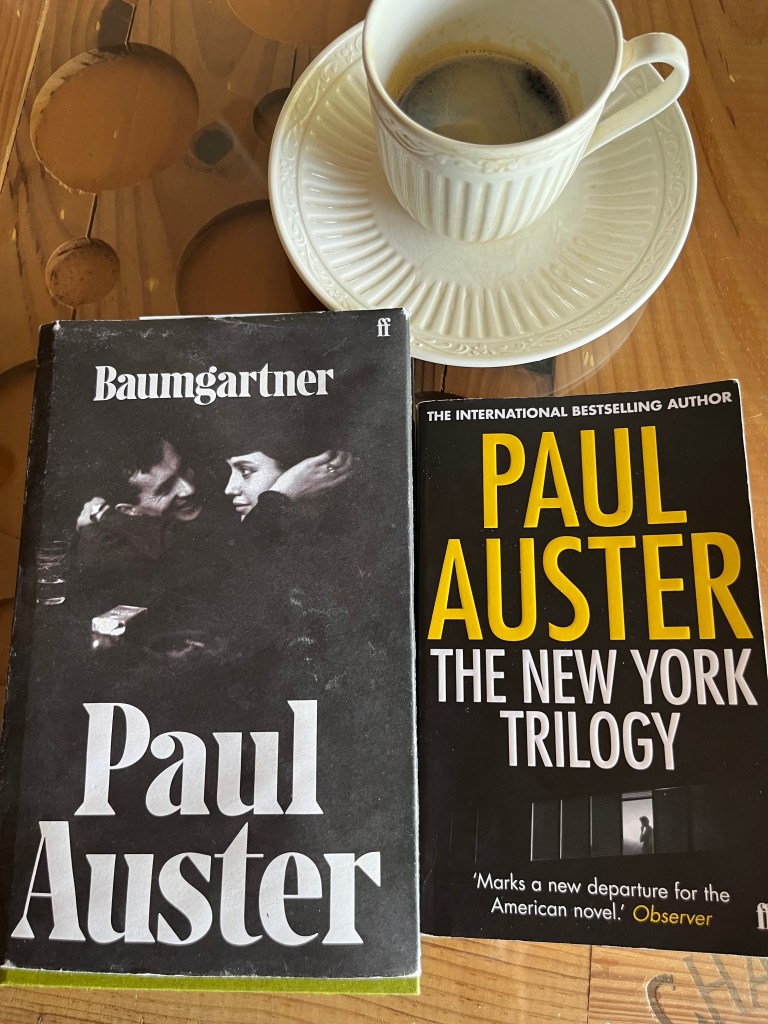
To quote what Paul Auster wrote in his latest novel Baumgartner as he described the protagonist thinking about what remains of his life now that he is seventy years old:
‘The days and months are rushing past him ever more quickly now, and whatever time he has left will flit by in a blink.’

Baumgartner by Paul Auster is about seventy-year-old philosophy Professor Sy Baumgartner from Princeton, soon-to-be retired. It has been almost a decade since Anna, his wife of forty years passed away. He still misses her.
The story begins with him sitting at his desk in his study. ‘Pen on hand, he is midway through a sentence in the third chapter of his monograph on Kierkegaard’s pseudonyms when it occurs to him that the book he needs to quote from in order to finish the sentence is downstairs in the living room,where he left it before going up to bed last night. ‘

On the way downstairs to retrieve the book, he is distracted as he remembers that he is supposed to call his sister,Naomi at ten o’clock and since it is almost ten, he decides that he will go to the kitchen then he smells something burning. ‘A sharp ,stinging smell.’. He has forgotten to turn off the burner and the small aluminium pot that he used to cook his breakfast eggs three hours ago is now destroyed. ‘He turns off the burner, and then, without thinking twice‘ he lifts the damaged egg boiler off the stove and scalds his hand.
As the story progresses, it is about the physical and emotional pains and agonies of growing old alone. Baumgartner is thinking about the indignities of old age. ‘How many years of active and productive life before his mind or his body or both begin to fail him.’.
‘For one thing, he concludes that the moment has come for him to retire.He will withdraw from active teaching duties and take on the august if meaningless position of professor emeritus, relinquishing his spot in the department to a youngblood from the next generation.’
In this way he will still be able to access to the university library and maintain his friendships with colleagues from various departments. He can attend lectures, discussions and informal gatherings if and when he wants to without the burdensome aspects of his job such as attending committee meetings or ‘haggling with disgruntled students over their grades‘ and ‘no more bureaucratic bullshit.’

He also has in mind a new book called Mysteries of the Wheel and he wants to dedicate as much time as possible to it. Indeed time is of the essence.
He wishes he had stopped Anna going back to the water but then Anna was not a person you could tell her what not to do. He recalls how he had first met Anna decades ago. They were from different backgrounds. He was from a struggling lower-middle-class family while Anna was born into a comfortable and wealthy home.
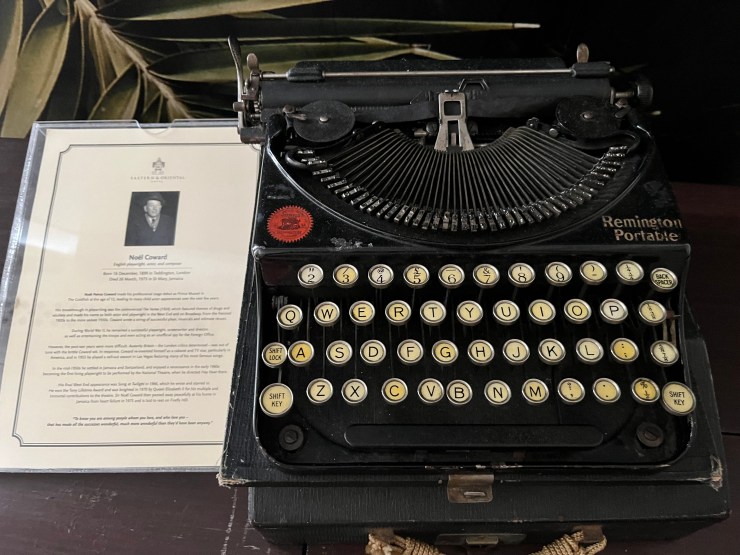
One night, he hears a noise , faint buzzing sound that comes from one of the downstairs rooms so he gets up from his bed and investigates. There, in Anna’s workroom, ‘Anna’s typewriter is still perched on the mahogany plank jutting from the desk.’ When he sits down in the chair behind the desk the red telephone sitting on his wife’s desk, which is unconnected and hasn’t rung for years rings. Frightened and curious, he lifts the receiver. On the other end of the line is Anna ‘talking to him with the same resonant voice that belonged to her when she was alive‘, speaking from beyond where she is telling that if he continues to think of her, she is kept in a kind of limbo between life and non-life.
‘ She can’t be sure of anything, she says, but she suspects that he is the one who is sustaining her through this incomprehnsible afterlife, this paradoxical state of conscious non-existence, which must and will come to an end at some point, she feels, but as long as he is alive and still able to think about her, her consciousness will continue to be awakened and reawakened by his thoughts, to such an extent that she can sometimes go into his head and hear those thoughts and see what he is seeing through his eyes.’
He is fully aware that the telephone did not ring. After he dreams that dream, something begins to change in him. He has no religion but he asks good questions about what it means to be alive, even if he knows he will never be able to answer them.
The narratives are interspersed with extracts from Anna’s poems and writings(as well as being a poet, she has written several fragments of autobiography) and also a fable written by Baumgartner about a convict who is sentenced to write sentences. Baumgartner also thinks about his childhood. He thinks about his embittered father who had felt that he had had no choice but to quit his job at Newark Public Library and night school to take over the family’s tailor shop when his grandfather’s eyesight was failing. ‘Books were far more compelling to him than the drudgery of operating a sewing machine‘ but he could not escape his fate of becoming a fourth-generation ragman.
‘ As it was told to Baumgartner, his father felt he had no choice. Of course he had a choice. Everyone has a choice, and the one his father made was not necessarily the wrong one, even though it embittered him for the rest of his life, but if he had made the opposite choice and run off to become a history professor or a lawyer or a footloose troublemaker, he probably would have tormented himself for the rest of his life over the unpardonable sin of having left his family in the lurch at its time of greatest need, which would suggest that there was no right choice or wrong choice, only two right choices that both would have come out wrong in the end.’
That was how his father had met his mother, Ruth Auster when she was hired as a seamstress at Trocadero Fashion in 1939. His mother was considerably younger than his father and was a strong and steady person who had been a grownup beyond her teenage years. Ruth was her son’s steadfast consoler and protector through his childhood.
Though nothing much seems to be happening in Baumgartner, the last novel by Paul Auster, it is indeed a good read. Its story is essentially about a philosophy professor confronting mortality and coping with grief and loneliness in his senior years. From looking into his past and his states of mind torn between his memories and the present, it is a sweet story about a bookish character growing old. Paul Auster‘s sentences are gorgeous.

 Bookaholic Macchiato