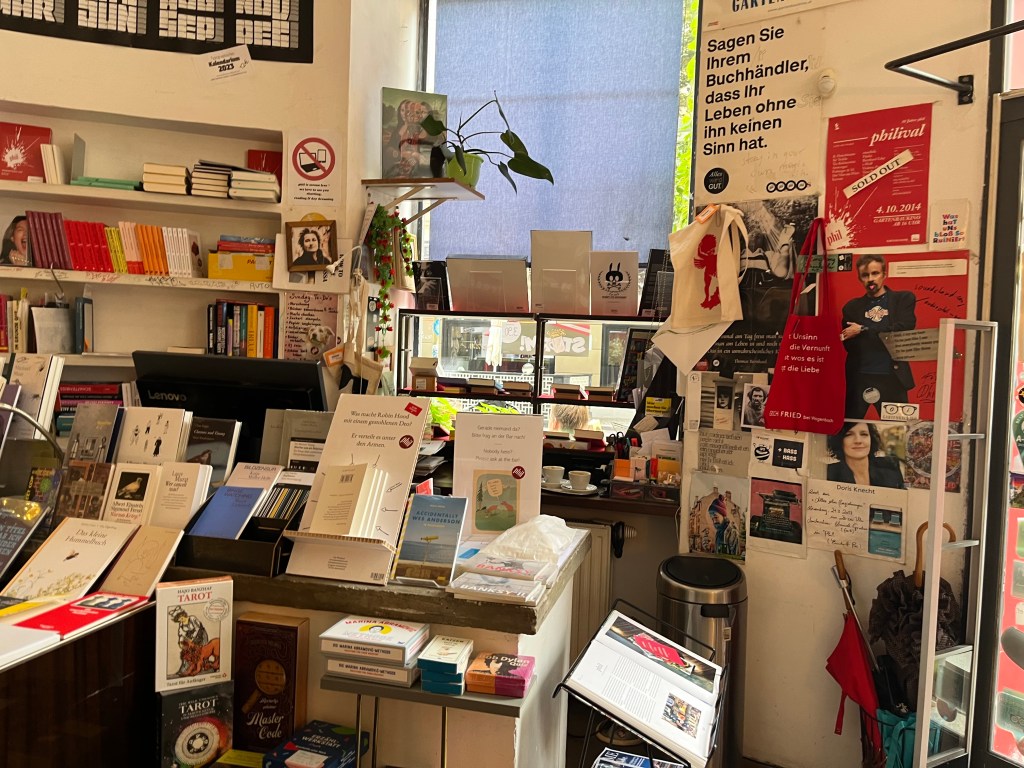
You want to be left alone when you feel anxious. Sometimes you crave for isolation and solitude when you are at a family dinner that has all your relatives gather under one roof. This is when I wish I had a book with me that I can immerse in. Reading and writing can be a diversion or escapism. Reading and writing help me a great deal to expand my world. Words may be inadequate to articulate and translate what one is actually thinking or experiencing, particularly the sense of sadness, alienation, isolation, distrust and disconnection. Language has its limitation but then only through writing things down with words and reading widely , one can get better understanding of our inner feelings, the world we live in and how we are not that different from one another. I deal with words in my line of work. In legal documents, words are calculated to be functional, they leave no room for artistic expression hence they come across as dry. In creative and artistic work, as you narrate a story, a scene, a character , you are at liberty to play with words. When you read a work of fiction, you enter a world invented by the fiction writer. You know that the stories are fictional but there are nuances of the narratives that resonate with you as they remind you of something that you might have experienced before. Words have their limitations but they can help to decipher something elusive in us.
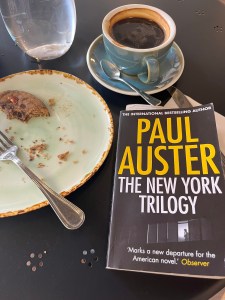
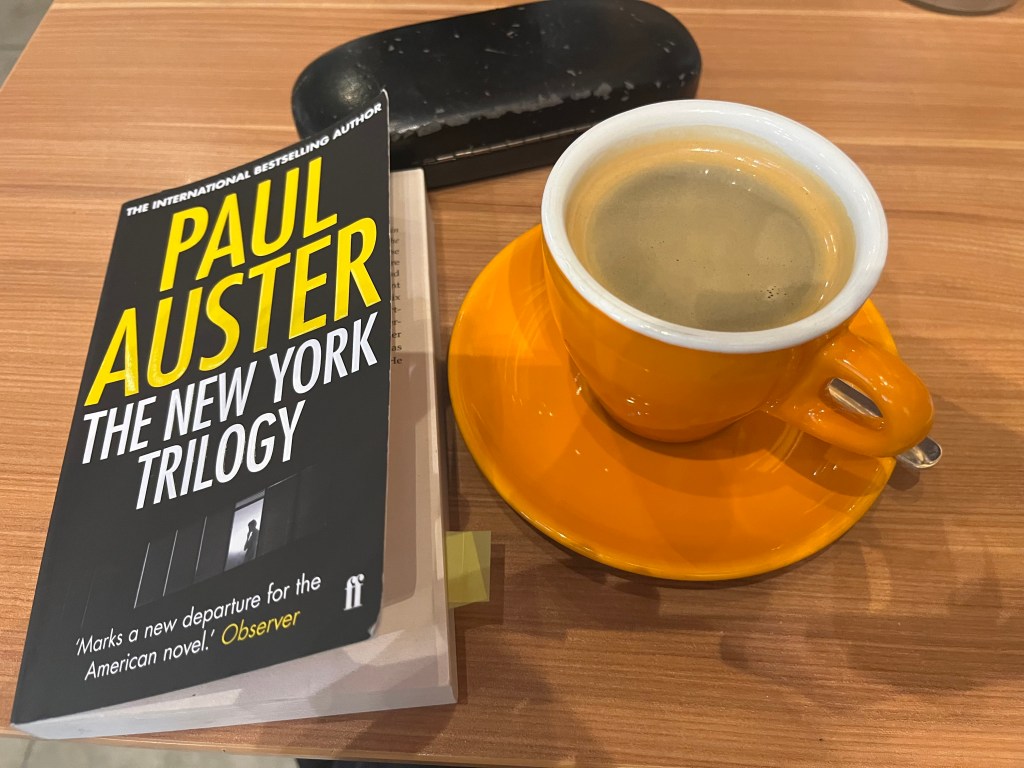
A couple of months ago, I read The New York Trilogy by Paul Auster.
In CITY OF GLASS, thirty-five year old Quinn, a writer of mystery novels and detective stories is somehow mistaken as a detective and becomes involved in a case more puzzling than the stories he has ever written. It all begins with a strange phone call in the middle of the night.
Quinn used to be more ambitious and as a young man, he had published several books of poetry and had written plays and worked on a number of long translations. He has suddenly given all that up and writes what he writes now under the name of William Wilson. His friends wonder how he earns his keeps when he no longer writes like before. They do not know that he now writes under a pseudonym. He spends no more than five or six months on a novel producing one a year and that brings him enough money to live modestly in a small New York apartment. He reads, goes to the movies, watches baseball on television and goes to the opera in winter. More than anything else, he likes walking through the city, ‘rain or shine, hot or cold‘,nearly every day. These walks do not really take him anywhere, ‘but simply going wherever his legs happen to take him‘.
‘New York was an inexhaustible space, a labyrinth of endless steps,and no matter how far he walked, no matter how well he came to know neighbourhoods and streets, it always left him with the feeling of being lost. Lost, not only in the city, but within himself as well.Each time he took a walk, he felt as though he were leaving himself behind, and by giving himself up to the movement of the streets, by reducing himself to a seeing eye, he was able to escape the obligation to think, and this, more than anything else, brought him a measure of peace, a salutary emptiness within. The world was outside of him, around him, before him , and the speed with which it kept changing made it impossible for him to dwell on any one thing for very long. Motion was of the essence, the act of putting one foot in front of the other and allowing himself to follow the drift of his own body. By wandering aimlessly, all the places became equal and it no longer mattered where he was.’
Then one midnight, the telephone rings and someone asks for Paul Auster of the Auster Detective Agency. The caller rings again the subsequent night and then again a few nights later. This time he tells the stranger on the phone he is Auster. The caller thinks that he is going to be murdered by a man he knows and he does not know where he is . The caller introduces himself as one Peter Stillman and he needs ‘Auster’ to find the man. Quinn now assumes the identity of Auster. You see, Quinn ‘ had, of course, long ago stopped thinking of himself as real. If he lived now in the world at all, it was only at one remove, through the imaginary person of Max Work.’ Quinn who writes crime stories as William Wilson has created Max Work, the private-eye who has solved a series of crimes. Quinn has allowed himself to vanish and now resides in the world of Work. He is given a photo of the man he has to follow and watch. As he assumes the role of the private investigator ‘Auster’, he becomes entrapped with the Stillman’s case and eventually descends into madness. In the course of investigating, he finds Paul Auster through the white pages of the telephone directory.The Paul Auster that he has found is not a private detective either. It is apparent that Paul Auster the author of the story is also a character in the story. When Quinn visits Auster, the latter is working on a book of essays and the current piece is about the authorship of Don Quixote. City of Glass explores layers of identity and there is also discussion about the authorship of Don Quixote between the characters, Quinn and Auster.
In GHOSTS, Blue has been hired by White to spy on Black. He is a student of Brown. From a window of a rented room on Orange Street, Blue keeps watch on Black, who is across the street, staring out of his own window. He also sees that Black is writing. ‘A look through the binoculars confirms that he is‘. Black is writing in a notebook with a red fountain pen. So Blue records that ‘3 Feb. 3pm Black writing at his desk.’ Then he sees that Black is reading. ‘Blue looks through the binoculars and reads the title of the book that Black is reading. Walden, by Henry David Thoreau.’
To Blue, it is such a sedentary task to watch someone read and write. ‘Well, not every case can be exciting. You’ve to take the good with the bad.’
Life has slowed down for Blue and he does not know the purpose of the assignment. He makes up stories about the reason that White has asked him to watch Black. Could it be that they are brothers and there is an inheritance at stake? ‘Blue does not mince words, however. He knows that more than anything else he would like to learn the real story. But at this early stage he also knows that patience is called for.’
Blue is thinking of the woman whom he likes to marry. He misses her and thoughts of the future Mrs Blue occasionally disturbs his peace of mind. ‘But while he feels reasonably content whenever he confines his thoughts to Black, to his room, to the case he is working on, whenever the future Mrs Blue enters his consciousness, he is seized by a kind of panic. All of a sudden, his calm turns to anguish, and he feels as though he is falling into some dark, cave-like place,with no hope of finding a way out.’
It becomes apparent that Blue is in for the long haul. While Blue writes his reports and in return is getting paid by White, in watching Black, Blue loses himself as he becomes immersed in Black’s daily life.
In THE LOCKED ROOM, the narrator’s childhood friend, Fanshawe has disappeared, leaving behind his wife, Sophie and their baby, Ben. He has also left behind a collection of his creative work : novels, plays, and poems. For years, the narrator has lost contact with Fanshawe. Upon receiving a letter from Sophie, the narrator visits her at her home in Chelsea. Sophie tells him about how she had met Fanshawe in New York and they got married within less than a year. She was expecting Ben when he left. Her husband told her that he was going to visit his mother but he never went there. Sophie had also engaged a private detective to find him but to no avail.
Fanshawe has never published his work. Before he met Sophie, he had done all kinds of work, some physical and manual work and also tutoring and ghostwriting. He made a pact with Sophie. He promised to do something with his creative work within a year and if he failed to keep up with his end of the bargain, she could take it to the narrator and it would be up to the narrator to decide what to do with them. Furthermore, if anything were to happen to him, she would give the manuscripts to the narrator who would make all the arrangements and be allowed to receive twenty-five percent of any money the work happen to earn. According to Sophie, her husband often talked about the narrator and he kept up with the narrator’s writings and read all the articles the narrator had written and published. The narrator is flattered that his childhood friend considers him one true friend he ever had in the world. Nonetheless Fanshawe’s praises have left the narrator with mixed feelings. The narrator has wanted to be a novelist, but he realises that he does not actually have such a book in him. He can go on writing articles because by then he is a sought out critic and a creditable reviewer for books, poetry, movies, plays, art shows, concerts and even baseball games. He is not quite thirty, yet he feels old inside him. Is his childhood friend giving him a chance to redeem himself? He agrees with Sophie to take on the task but it takes him several days before he has the courage to open the suitcases containing his friends’ work. He realises that he does not want his friend’s work to be bad but he also does not want it to be good. The narrator’s childhood friend has once again re-entered into his life.

In the narrator’s voice,
‘ This is a difficult feeling for me to explain. Old rivalries no doubt had something to do with it, a desire not to be humbled by Fanshawe’s brilliance- but there was also feeling of being trapped.I had given my word. Once I opened the suitcases, I would become Fanshawe’s spokesman – I would go on speaking for him, whether I liked it or not. Both possibilities frightened me.To issue a death sentence was bad enough, but working for a dead man hardly seemed better.’
For several days, the narrator cannot decide which one is worse. He finally opens the suitcases because he wants to see Sophie again. He needs a reason to call on her.
He takes a week ‘to digest and organize the material, divide finished work from drafts and gather the manuscripts into some semblance of chronological order‘. He contacts an editor at one of the larger publishing house and hands him Fanshawe’s big novel. He sets things in motion.
When Fanshawe’s work is read and discussed, the narrator understands that his feelings are quite beside the point. In his voice :
‘To care about words, to have a stake in what is written , to believe in the power of books – this overwhelms the rest, and beside it one’s life becomes very small.I do not say this in order to congratulate myself or to put my actions in a better light. I was the first, but beyond that I see nothing to set me apart from anyone else.‘
The narrator remembers things from their childhood days. They lived next door to each other. Their mothers were close friends, their fathers were tennis partners, neither of them had a brother and they were born less than a week apart. In grammar school Fanshawe was already composing little stories and he had always been a writer. Even in those early years, one had the impression there was nothing the narrator’s childhood friend did not do well. He had been a befuddled witness to his friend’s actions. His friend had talked about the importance of ‘tasting life’. All that was the childhood and growing up experience a long time ago. Now after all these years, the narrator becomes once again lured into the trajectory of his childhood friend’s mysterious mind.
All the stories in The New York Trilogy are open ending. Though City of Glass and Ghosts are semblance of detective stories, they are unlike the usual detective stories. They are about identities and surveillance. At the end of the day, the investigators wonder if they are the ones watching the subjects or that they are the subjects being watched. Paul Auster‘s prose is eloquent, superb and stylish. His stories suggest that everything can be connected in one way or another and at the same time things that happen do not make sense and it can be absurd to make a point of anything.The novel is about the limitations of language . I gather from the Q & A by Inge Birgitte Siegumfeldt in A life in Words that the point which Paul Auster is making is this : ‘we have to learn to live with ambiguity and uncertainty‘. There are things that we are not going to know and will never know. The stories are about accommodating the unknown.

 Bookaholic Macchiato
1 thought on “Meaning of words”