The fifteenth day of the Lunar New Year ended yesterday. How time flies. Though I was not into the rituals of the celebration, I basked in the spirit and the gaiety of the season.

It was after dinner on the first day of Lunar New Year when my elder daughter recommended that I read Sister Snake by Amanda Lee Koe, as she handed me the fiction that she had borrowed from the Singapore National Library. I read it in a couple of sittings during my brief visit. I am glad that I read the novel. What a splendid read as we ushered into the year of the snake that began on 3rd of February.
The question I often ask myself:
What does it mean to be a human? Do you know who you are?
Being a human means that we are a bundle of emotions and our state of mind is changeable and in a constant flux due to environmental factors, social issues and our insecurities. As I age, I am thankful whenever there is a sense of clarity, but I am still very much a work in progress. Humans are all work in progress as we are capable of learning , growing, evolving and adapting to changes and all kinds of challenges. .
There are increasingly more rules and regulations with the view to make it a safe world for us to live in. But rules are a double-edged sword. While social construct and rules provide some structure and order, they can also stifle one’s growth and creativity. In my teenage years, I dreamt of a wandering and nomadic life. I must have found the notion of living in various parts of the world romantic but it was only a pipe dream . Imagine you could have supernatural powers like Su and Emerald the characters in the latest fiction by Amanda Lee Koe, you would feel invincible, wouldn’t you ?
Sister Snake by Amanda Lee Koe is a satire inspired by the legendary Chinese tale about the white snake and the green snake. The fiction is mainly set in contemporary Singapore. Emerald aka Xiaoqing is a nihilistic sugar baby in New York and she lives without a plan. Su aka Bai Shuzen is the picture perfect woman who is married to Paul, an orthodox education minister who is vying for the top governmental post.
Both women share sisterly bond and a secret: Once upon a time they were snakes, Su, a white snake and Emerald , a green snake. A thousand years ago in the year 815 they were basking under a full moon in Tang Dynasty China until they each swallowed the lotus seeds that bestowed upon them human form and ageless immortality. Before they transformed, the green snake signed to the white snake : ‘This body itself is emptiness. Emptiness itself is this body‘
‘When they were snakes, they were as close as two willow boughs on the same tree. But being human is a torrid world of complications, and after the canker of centuries, it was easier now to let Su think the worst of her, to assume she was an irresponsible brat who didn’t care about anything but having a good time.’
Emerald does not live in any city for long as she moves cities every two or three years because she is curious and always seeking out the counterculture. Su lives in Singapore and it is apparent that she has been there for a decade now. When Emerald is down and out in New York, she uses her last coins to call Su who criticises Emerald for lacking financial prudence and tells her to get a job. Emerald remains defiant of her way of life.

Here is an excerpt :
‘ How was any of this her fault, though? There are so many things that humans have decided they need in order to survive.Money. Property. Status. If survival isn’t an issue, getting ahead comes into play. If you do get ahead, then you start mulling over your legacy. There’s no end to all the striving. None of it makes sense to her, even after all these years. In the wild, you hunt when you’re hungry, find a rock to hide under when you want to rest. You do what you feel like doing, when you feel like doing it. There’s no one to answer to but yourself.
Unlike Emerald, after becoming a human, Su had been able to take the gainful aspect of being human. Su had accumulated personal wealth by first purchasing Lloyd’s stock at an inflated price from an illegal broker in Change Alley in the 1850s. ‘Time is a natural multiplier.‘ That bundle of shares had since multiplied umpteen times their value, and over the centuries Su continued to make judicious investments and presently owns vast holdings across offshore accounts.

Su may be critical of Emerald, she cares deeply for the latter’s safety and is constantly following news stories about snakes. When she reads about a green snake attacking a man in Central Park, she immediately flies over to New York and persuades Emerald to live with her in Singapore. For Su, the need for stability and safety might have stemmed from her traumatic experience as a white snake when she had been attacked and badly injured by some male snakes. She was then nursed back to health by Emerald, a green viper at the time . Beneath Su’s well- composed and elegant demeanour, when angered, she is dangerous and extremely vicious as she is a white krait. While Su does everything possible to fit into the society in Singapore, as the story progresses and events unfold , it becomes impossible for her to hide her authentic self.
Sister Snake by Amanda Lee Koe is a captivating story that blends the magical realm and time travel with characters living in the present world. It is a thought-provoking and darkly funny satirical tale. The story is about knowing who you are, dealing with duality (individualism vs conformity), staying true to yourself and how to live free ultimately.
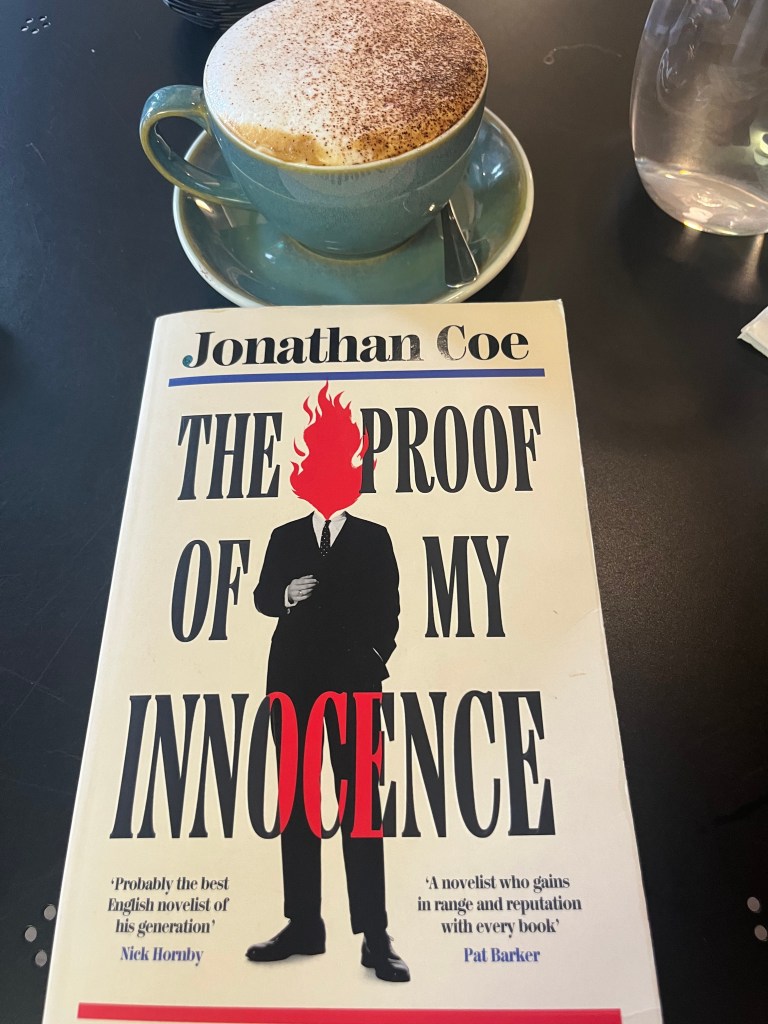
I was half way through reading The Proof of My Innocence and due to space and weight constraint, I decided to leave it behind for my short trip to Singapore. Instead I brought along City of Small Blessings by Simon Tay that fitted snugly in my handbag. Upon returning home, I resumed reading The Proof of My Innocence by Jonathan Coe. I’m not into politics but I enjoy learning about politics and history by reading fictions.
The Proof of My Innocence is set during the brief premiership of Liz Truss and the passing of the British Queen in autumn 2022. A murder is in progress and there are cliffhangers throughout the book. It discusses British conservative ideology since 1980.
In the story, Christopher Swann writes about British politics on his blog as he is concerned about the future of UK. He is on the path to uncover a secretive think tank, founded at Cambridge in the 1980s. For decades since he was a student, he had been investigating the spread of the far right into the political centre.
He comes to stay with Joanna Reeves, his close friend from the Cambridge days. Joanna is married to Andrew Maidstone and they have a daughter, Phyllida who is now working a zero-hour contract serving Japanese food to holidaymakers at Heathrow’s Terminal 5. They are now in their early sixties and they live in Berkshire. Chris is there to attend TrueCon conference in the fictional village of Wetherby Pond located in the Cotswolds.Before the conference, Rashida his adoptive daughter also comes to stay with Joanna’s family. Rashida has been adopted by Chris and his ex-wife who now lives in upstate New York.
Phyl and Rashida, both 23 years old, long for the 1990s.Both are fans of Friends. It seems that people their age like the show due to nostalgia for a time before they were born, a time when there were no smartphones. They have a sense of anemoia for a time they never lived in. According to Phyl, the characters in Friends had never ever sent a text for the entire ten seasons. I have binge watched all of the ten seasons before and they feel like comfort food that evoke in you a little nostalgia for the nineties .

Phyl is a university graduate who studied English and Rashida comes from New York to pursue a master degree in London, studying business and management. Phyl aspires to write and she is experimenting with different genres: cozy crime, dark academia and autofiction.
Rashida thinks that the ageing Tories with two or three houses and no mortgage and nice fat pensions to live off are now punishing the younger people by giving them Brexit and take away their chance and dream of living all over Europe.To Rashida and Phyl , for forty years the country’s been shaped in the image of the older generation and now they look around and they don’t even like what they see. The older generation and the Gen Z see different worlds.
Through the flashbacks narrated by another friend from Cambridge days, Brian Collier, who has written a memoir entitled “The Shadow Chamber, A Dark Academia Story” , we learn about his experience at Cambridge University forty years ago. Brian matriculated in 1980 and in March 2020, just before the lockdown started, he attended a reunion at his old college to mark the anniversary. That prompted him to write his memoir. Here is an excerpt:
‘This was what set me thinking about that time. I’ve led, I think, an interesting life : most of the last forty years have been spent working in psychiatry, and it would be true to say that pretty much every facet of human behaviour and human eccentricity has been offered up to me during the time. And yet, for some reason, nothing is stamped as vividly on my memory as the three years I spent at St Stephen’s College, three years in which I almost never stepped outside the same one square mile of streets and buildings in the centre of Cambridge.

None of the people I’m going to write about in this little memoir attended that reunion. Most of the people I know are dismissive of that kind of thing, and in fact I surprised myself by wanting to be there. I suppose that, despite the way I chafed against the place, my time at Cambridge-which took me out of one world without me really moving into another – left a more lasting mark on me than it did one the people hwo had always felt that htey belonged there as if by inalienable right. I grew used to it, of course. You can grow used to almost anything. But that’s not the same as feeling at home there. I never felt at home there. I never felt that I belonged. That was what made it special. ‘
Brian, the memoirist in the story is a close friend of both Joanna and Christopher. In the story he has died of bowel cancer and before he passed he handed his memoir to Joanna. The memoir becomes relevant when a murder enquiry is soon in progress after Christopher meets with a fatal accident.
The Proof of My Innocence is multilayered. The author uses the British train safety announcement ‘See it. Say it .Sorted.’ to form the novel’s structure.
Part One See it – A Cozy crime Mystery entitled ‘Murder at Wetherby Pond’
Part Two Say it – The Shadow Chamber A Dark Academia Story
Part Three Sorted – Proof of Reborn An Essay in Autofiction
In Phyl’s attempt to write autofiction, she keeps hearing the phrase. See it . Say it. Sorted. She thinks back to the conversation she overheard on the train to Monaco the previous day.
‘The young American couple who were clearly on the verge of splitting up. You don’t know what’s going on in my head, she had told him. Because you’re not in there. And I don’t know what’s going on in yours either. All of us have our own realities and we’re stuck with them.
Was that how it was going to be, from now on? We’d all have our own realities, and nobody would agree whether the pandemic was real or if it was a hoax, whether climate change was happening or not, whether the earth was flat or the earth was round. What was the point of writing a book in a world like that? ‘
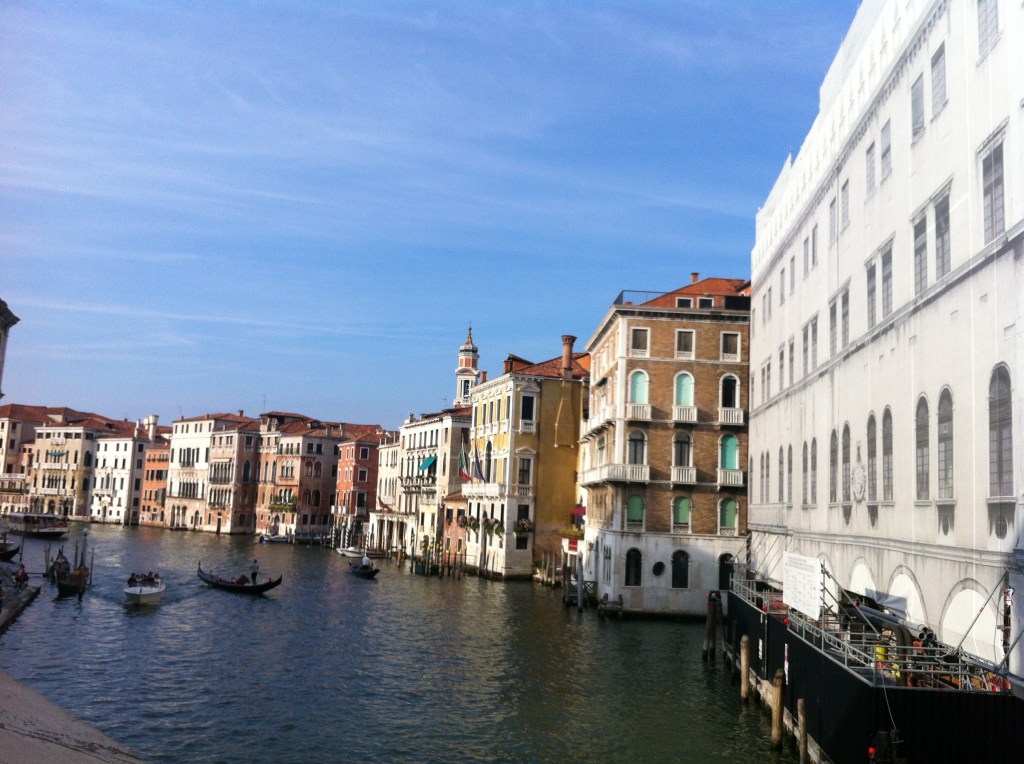
Under the autofiction, Phyl and Rashida travel to Venice by train. She notices that she does not hear the words ‘See it. Say it. Sorted’ every few minutes but as she feels the rhythm of the wheels on the track beneath her, these words will not go away.
In Phyl’s voice :
‘See it. Say it. Sorted. See it. Say it. Sorted.
When everyone sees the world so differently, how do you find the truth? SEE IT. How do you tell the truth? SAY IT. How do you agree on what’s true and what isn’t ? SORTED.’
While it takes me a bit of time to grasp the structure as the fiction darts between genres, the characters are colourful hence the read is engaging. I find that The Proof of My Innocence by Jonathan Coe a fascinating and educational read. It is a satire that is about contemporary politics and the literary world.
A couple of days ago, my younger daughter was in London visiting her friends. When she texted to tell us that they say non-stop ” See it , Say it, Sort it,” on public transport, I was just about to finish reading the novel. So my response on our family group chat was ,” haha it’s in the novel I’m reading.”

 Bookaholic Macchiato