It is said that change is a quiet undoing, but do people actually change for better or worse? Certain situations have transformative powers. Giving birth to a child or becoming a parent is definitively an example of such a transformative experience. Each and every experience can help us discover things about ourselves and these experiences may also be the opportunities for us to improve ourselves.
‘We meet ourselves time and again in a thousand disguises on the path of life.’ This quote is attributed to Carl Jung. There is no certainty in life and along the way , we face multiple challenges, some new some old. The people you meet and the situations you encounter are like mirrors showing you the part of you that needs attention. How often I find myself losing cool yet again and responding badly in certain scenarios. It can be frustrating when you find that you have not improved and you still have to work on staying calm in the face of troubling or adverse situations. It is a matter of letting go of control and telling yourself that you cannot control how others think or act.
Your past is an integral part of you and you have to own it. You own your narratives so you can live with yourself . The thing is what defines you is fluid and changeable. If you think you know yourself, you actually don’t. Even now I still do not think I know myself thus if I could go back in time, I might still have made those default decisions that I had made.
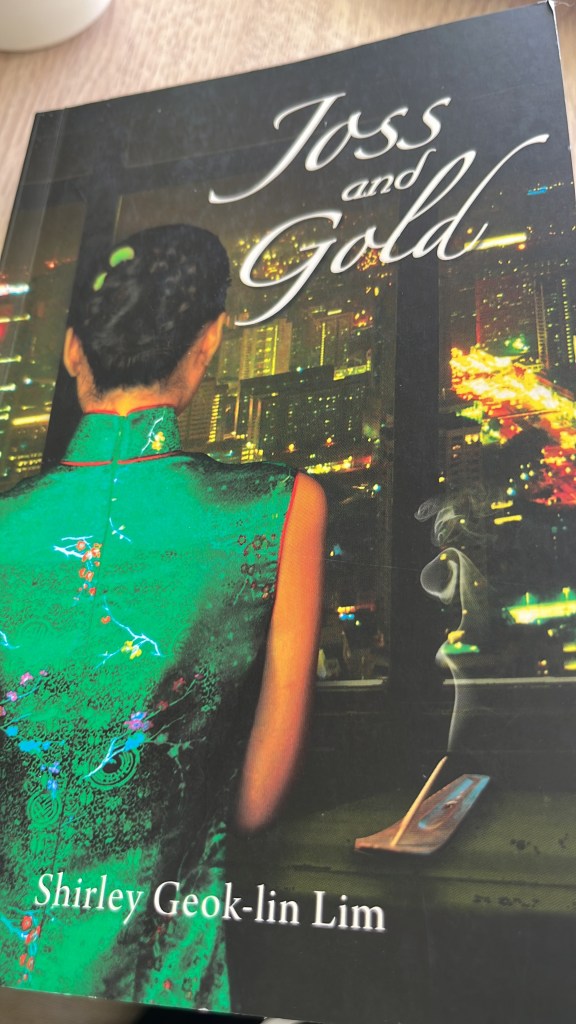
Li An is fiercely independent since very young. Her father died when she was three and a year later, her mother remarried a rubber trader. Her stepfather was uncaring and he ‘commanded every atom of her mother’s body ever since — in childbearing, housecare, cooking, and dutifulness to his family, his loud bossy sisters and infirm yet ever-present parents‘. Her older brother left when he was seventeen. She in turn fled her home in Penang when she received a scholarship to study English literature at the university in Kuala Lumpur. When Li An graduated from the University of Malaya, she married Henry Yeh who was a graduate student in Chemistry at the same university. She was enthusiastic about words, poetry and literature just like Henry about science and how materials reacted with certain elements. She first worked as a tutor in the English department at the university.
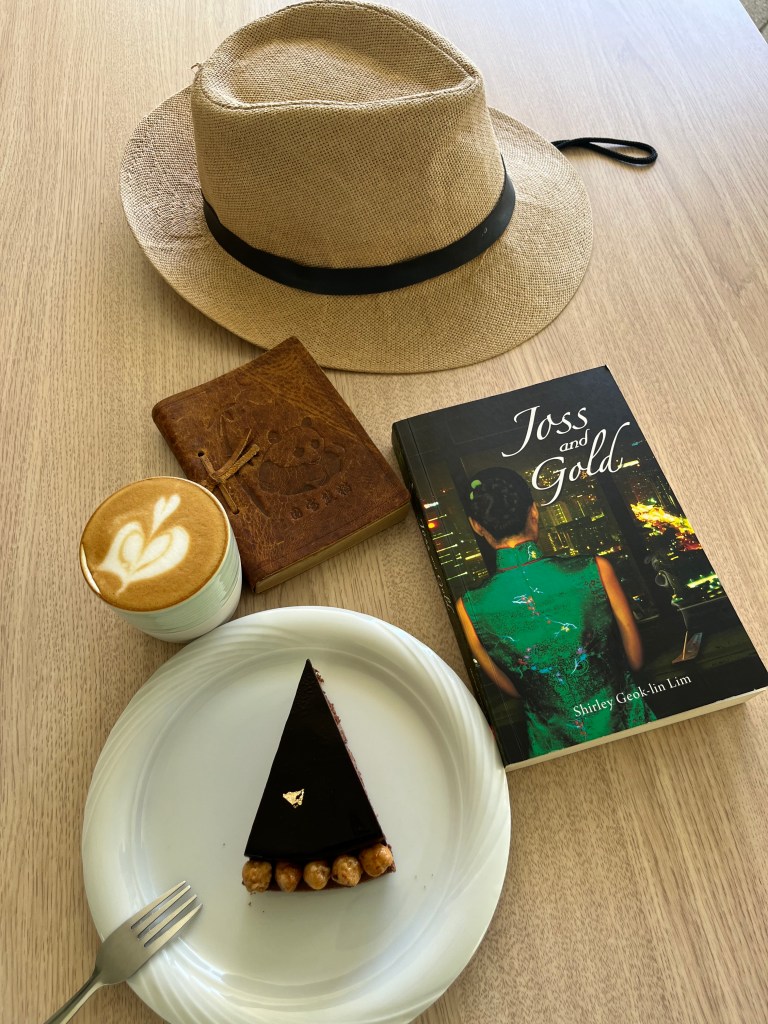
Ellen and Gina were Li An’s good friends at the university. Ellen studied Economics and Gina studied history. Ellen is the only daughter of a successful stationery and bookstore owner and she grew up reading all the comics and Western magazines that her father’s shop carried. Gina came from a very traditional Chinese family. After graduating, she returned home to teach. At the time, she was in a hopeless relationship with Paroo who was from a traditional Indian family.

Twelve years later, Li An, now aged thirty-five, lives in Singapore. She is the editor-in-chief of a known weekly business bulletin ‘BioSyn-Sign‘ ‘a hot document studied by investors, shareholders, and the Monetary Authority of Singapore for clues to the company’s health and future‘. She is a single parent raising eleven-year-old Su Yin, a pretty green-eyed brown-haired Eurasian with the help of Henry’s father’s second wife, Mrs Yeh who has accompanied Li An to Singapore. Henry’s father was killed when a a mob broke into his house on May 13 . Ellen, her good friend becomes Su Yin’s godmother.
‘A resident of Singapore for the past nine years, she had become accustomed to being merely a spectator in the city. Singaporeans talked to her about family events, weddings, Chinese New Year dinners, the Sunday sermons ,and their thirtieth school reunion with relish and blandness.It was their culture, their world, their lives , and she listended with skilled attention, grateful to be included in the conversation, although slightly inattentive about the details, the lists of dull characters, and the stories never as funny as the speaker had found them.’

She is persuaded to attend the school reunion dinner in Kuala Lumpur. Gwen has booked a table and told everyone that Li An is coming. They are celebrating the Penang Free School Centennial in the Kuala Lumpur Presidential Club. ‘Like Singapore, Kuala Lumpur had become a stony paradise.‘ At their table, she meets her former school friends, amongst them, a successful doctor still reserved and careful, a multimillionaire cement merchant, they talk about shares, Australia, the condominium prices and getting rich. There she sees Henry and his expectant wife. ‘Henry was moving toward the line at the far end of the hall‘. Gwen explains that the wife was from Penang Free School, hence they are there .
‘He appeared the very same husband, patient ,indulgent. What had been the matter with her, she thought with a painful confusion, that she had not wanted indulgence? Could she not have been this woman, seated, eating, the baby within and the man with her together composing the magical triad by which families spun into existence?‘
Li An regrets turning up for the dinner. ‘She should not have come; she did not belong in Malaysia, just as Su Yin did not belong to Henry.‘
When Chester Brookfield from America shows up in Singapore, Li An has to confront her Malaysian past.

The novel is divided into three parts.
Book 1 is entitled CROSSING is set in Kuala Lumpur 1968-1969. The Malaysian chapters are about identity, multiracialism and what constitutes a “Malaysian”.
In 1969. Chester who majored in anthropology at Princeton joined the Peace Corps and was sent to Kuala Lumpur to teach woodwork. There was poor response for his classes at the Vocational High School because working with your hands was not valued since you could engage a carpenter or workman to repair anything. One day the headmaster asked him to teach English because another English teacher was needed.
‘Woodworking, he explained ,was carpentry as an art‘. He kept calling her Lee Ann when she corrected him that it should be Li An. He told her that his roommates Abdullah and Samad did not like him teaching English as they called it ‘the language of the bastards.’ He also did not understand why everyone wanted to learn English. Li An was determined to show Chester that Malaysia was a modern country. During his short stint in Malaya, despite gaining its independence from Britain in 1957, Chester observed critically and almost judgmentally that there was persistence of a colonial mentality in Malaya.
In this section , there are lively debates and discussions about postcolonial issues such as identity formation amongst different ethnic groups.
Book 2 entitled CIRCLING is set in 1980. Chester is now married with Meryl whom he had met in graduate school at Columbia. They reside in one of America’s most affluent middle class subsurbsm Westchester County, New York. He has felt lucky when he met Meryl but lately they are not getting on so well. Meryl chooses career development over maternity.
‘Ambitious talented Meryl, with her enormous energy and her admiration of his Peace Corps past, his study of Balinese culture, his circle of anthropologists and their endless talk of tribal rituals and magic-inspired lore. Like the dandelions on the lawn, his life with Meryl blossomed in the sun of her energy.’
He recalls his Peace Corps year in 1969. It has been eleven years since he left Kuala Lumpur. After the riot he cut short his contract. He feels uneasy whenever he thinks about his year in Malaysia.
‘It was a kind of panic, like the panic he felt when he saw the black smoke the night of the riots in Kuala Lumpur, a sensation of falling through space not knowing that there would be a landing.’
After returning to America, he has kept in contact with Paroo, Abdullah and Samad from his days in Malaysia.
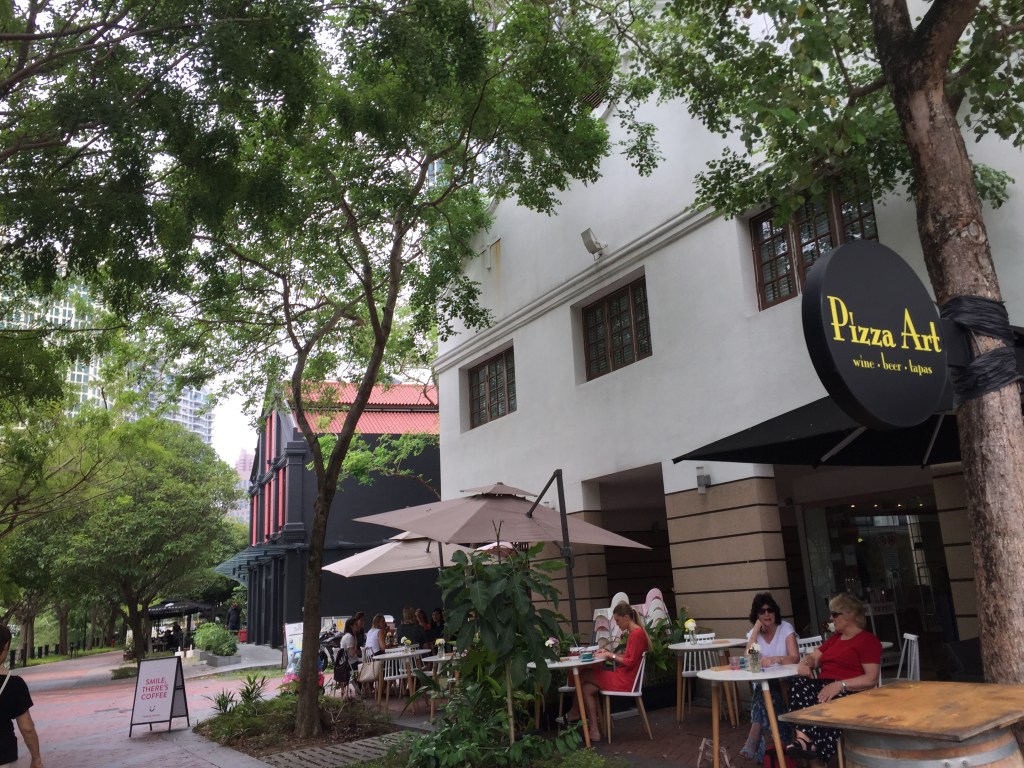

Book 3 entitled LANDING is set in Singapore. ‘Tall glassy bildings, steel road dividers, pounding lorries and blue taxis -it was an Anglo-Chinese detour a metamorphic metropolis of old British imperial might and new Chinese puritanical capital. It was a city for sociologists advising on policies to determine what kind of people should compose the city rather than anthropologists curious about the ways in which people shaped a city‘
His former roommates are delighted to see him. Abdullah and Samad are now in high positions. Samad, a successful bureaucrat is now making money like nobody’s business. He has become a prominent politician. Abdullah did postgraduate course in Harvard. Two years at the Kennedy School, his American accent has become more pronounced .
It is 1981. When Chester arrives in Singapore for his research project, he is invited to a department tea and asked to give a seminar during his stay. ‘He had left Malaysia as a longhaired student , and returned to Singapore an esteemed professor. ‘
In this section, the proud and independent Li An has to re-examine her past when Chester arrives in Singapore. She wants nothing from Chester but she owes it to her daughter to let her meet and get to know her lineage. Henry is now remarried and recently becomes a new parent. At the funeral of his father’s second wife, Henry introduces himself to Su Yin as her father. Since birth, Su Yin bears the family name Yeh. His appearance at Su Yin’s school Cho Kang puts an immediate end to all that taunting about her foreign look and absence of a paternal figure. It is apparent that Henry and Chester now present upon Su Yin and her mother new possibilities. As a dutiful parent, Li An does not want to keep her daughter in ignorance of things that may matter in her life.
Li An has been evading her past. Now that the past has caught up with her, she has to resign to let things be.
‘Nothing she lived through was ever finally over.This thought struck her with a conviction that was oddly comforting. ‘

Joss and Gold, Shirley Geok-lin Lim‘s first novel had taken Lim twenty-two years to complete it. She began writing the fiction in 1979 and with her multiple commitments as an academician, writer, poet, wife and mother, the project has been relegated to the back-burner. It is a fiction packed with historical and sociocultural information about the changing landscape in Malaysia, Singapore and America. Lim’s masterfully crafted narratives weave a poignant story about the passions and struggles of characters from different cultures. It is an insightful and thought provoking tale about identity, race, love, relationships, politics and the impact of globalization and urbanization.
 Bookaholic Macchiato