
How we think has been largely influenced by the values that we have been brought up to believe and invest in.
Growing up we like to believe that we have choices. But it is hard to know where the heart is when our mind is 24/7. Often we take the tried and tested path by studying hard, get good enough grades to get an employable college degree so we can get a job, earn a decent living and have enough money to take a vacation and travel every now and then.
Sometimes you look back and you think if only you knew what you really wanted to do with your life. As we carry on, we should really go with the flow of things and be happy where we are.
‘The only true wisdom is in knowing you know nothing‘. – Socrates
‘ You are- your life, and nothing else.’ – Jean Paul Sartre
Jean Paul Sartre propounds that an individual’s essence is defined by the individual through how he or she lives his or her life. You create your own purpose and you give weight to your existence, life otherwise is meaningless.
Jiddu Krishnamurti famously said, ‘ Truth is a pathless land’.
We are work in progress and one day we hope to get to our truths and know our authentic self.
There was a time I had wished that I could send a clone to attend to those menial tasks or chores that I had to do or be present at some place where I was required to be and would rather not. But then that should be a matter of time management, prioritizing, and they are meant to be challenges that help to build your resilience and resolve. You cannot have them all and you need to know what matters to you.
But what if you are never given a choice from birth or that your choices are limited?
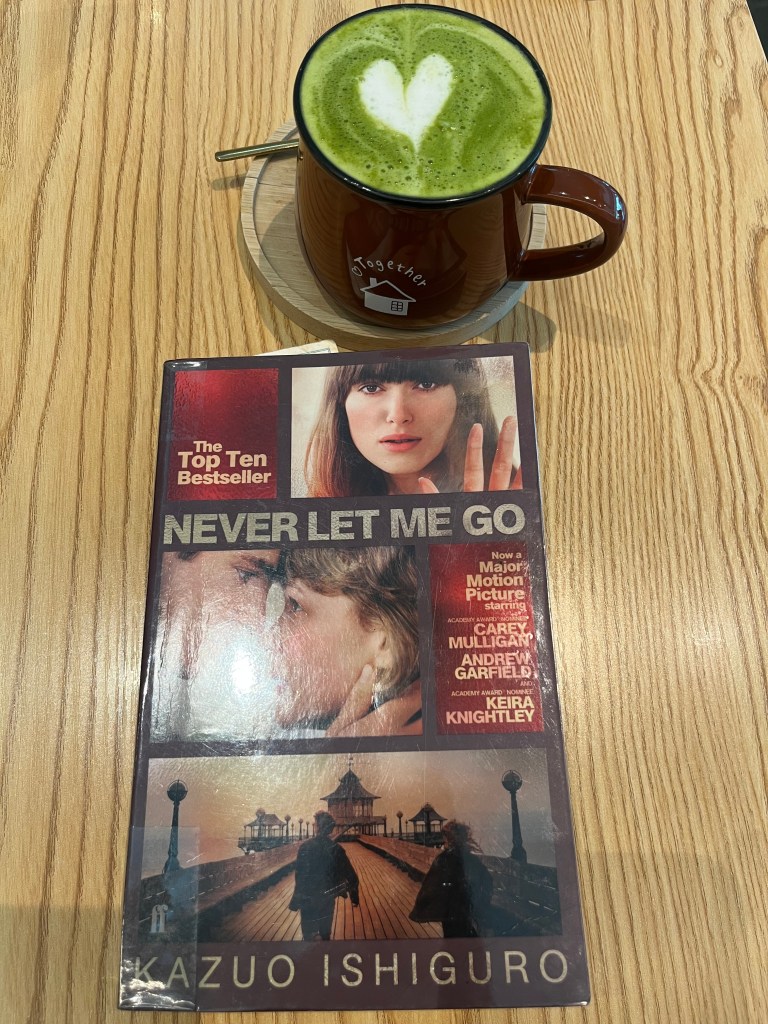
Never let me go by Kazuo Ishiguro is a coming of age story but it is unlike any other growing up story. The setting is a dystopian realm where clones are brought into this world for a specific purpose.
It is the late 1990s in England. Kathy H., Ruth and Tommy grow up together at Hailsham, an elite boarding school located in the idyllic English countryside. The students at Hailsham are brought up to be trained either as carer or a donor.
The story is narrated in Kathy’s voice in the form of a memoir. Kathy is now thirty-one and she is making attempts to come to terms with her childhood and the fate that awaits her and her relationship with her good friends in the past. It is also a story about friendship between three people who go to the same elite boarding school. In some ways, the various emotions and experiences that they go through as they are growing up are pretty much like what ordinary people experience. But they have guardians and not parents or families.These students are not quite given a clear picture of what lies ahead for them after finishing school yet they somehow know a few things about themselves. They are different from their guardians or the people outside.
Kathy is curious and a keen observer of the guardians and she notices various odd things they say in class. Through the years, Tommy and her exchange notes and they are always wondering and asking questions about themselves.
Kathy’s memory can be fragmented. Tommy thinks it possible the guardians had, throughout all their years at Hailsham, timed very carefully and deliberately everything they told them, so that they were always too young to understand properly the latest piece of information.To Kathy, it feels like she ‘always knew about donations in some vague way, even as early as six or seven‘.
In school, Kathy and her friends were given a lot of the sex lectures. While they are unable to have babies, they have been told to be very careful to avoid diseases when they have sex and it is more important this is for them than for normal people. All these lectures are all part of how they came to be ‘told and not told‘ about their role as donors whose organs will be used to help sick humans.
Kathy is going to stop being a carer by the end of the year and she has been ‘getting this urge to order all these old memories‘.
In her voice,
‘What I really wanted, I suppose, was to get straight all the things that happened between me and Tommy and Ruth after we grew up and left Hailsham. But I realise now just how much of what occurred later came out of our time at Hailsham, and that’s why I want first to go over these earlier memories quite carefully.’

As she reflects on her growing up years, she remembers how she used to play a song over and over again and she didn’t listen to the lyrics properly but she only liked the bit that went: ‘Baby,baby,never let me go...’ Then her tape mysteriously went missing.
Ruth’s voice is melancholic as she recounts those years at Hailsham….
‘ I want to move on now to our last years at Hailsham. I’m talking about the period from when we were thirteen to when we left at sixteen. In my memory my life at Hailsham falls into two distinct chunks: this last era, and everything that came before. The earlier years – the ones I’ve just been telling you about – they tend to blur into each other as a kind of golden time, and when I think about them at all, even the not-so great things, I can’t help feeling a sort of glow. But those last years feel different. They weren’t unhappy exactly – I’ve got plenty of memories I treasure from them –but they were more serious, and in some ways darker. Maybe I’ve exaggerated it in my mind, but I’ve got an impression of things changing rapidly around then, like day moving into night.’
Kazuo Ishiguro is an excellent storyteller. His prose evokes such tenderness and wisdom. Never let me go is a reminder of what it means to be human and these clones are very much like humans who struggle to find connection in their quest for identity, love and acceptance.

 Bookaholic Macchiato