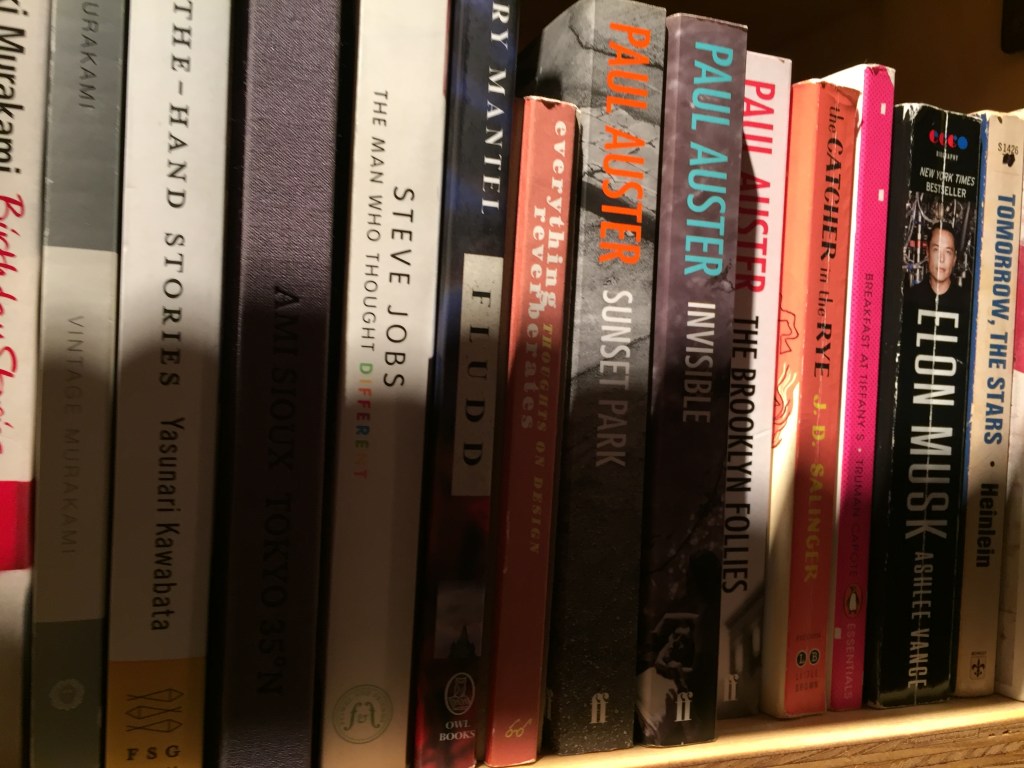
‘Have the courage to follow your heart and intuition. They somehow already know what you truly want to become. Everything else is secondary.’― Steve Jobs
In this digital age we are not only occupied with having to be on top with our deadlines at work, we have to answer emails and texts, declutter or organise them along with doing a lot of other tasks online and offline. We find ourselves constantly wired with everything everywhere all at once. It is not surprising that we find ourselves getting anxious and stressed out leaving us little room to question about what we are doing and asking ourselves what we truly want.
In Matrix Reloaded, when Neo went to the Oracle, she said to him.
‘ Because you didn’t come here to make the choice, you’ve already made it. You’re here to try to understand *why* you made it. I thought you’d have figured that out by now.’
The Oracle, as it turned out, is a sentient programme that has insight into the human psyche and she is supposedly clairvoyant.
How often we find ourselves distracted by all that on the Internet and become overwhelmed with information overload, and we are no longer clear if whatever choices we have made are truly ours to make. Hence I find that it is essential to set a time every day just to stay offline and read a page or two of a physical book.
Whenever we have a new recruit in our office, I will ask him or her if he or she reads anything aside from reading the law and news. It is always a joy to meet another person who enjoys reading and knows all about the magic of reading. If you are not yet a bibliophile, perhaps you only need to chance upon the book that will ignite your passion for reading.
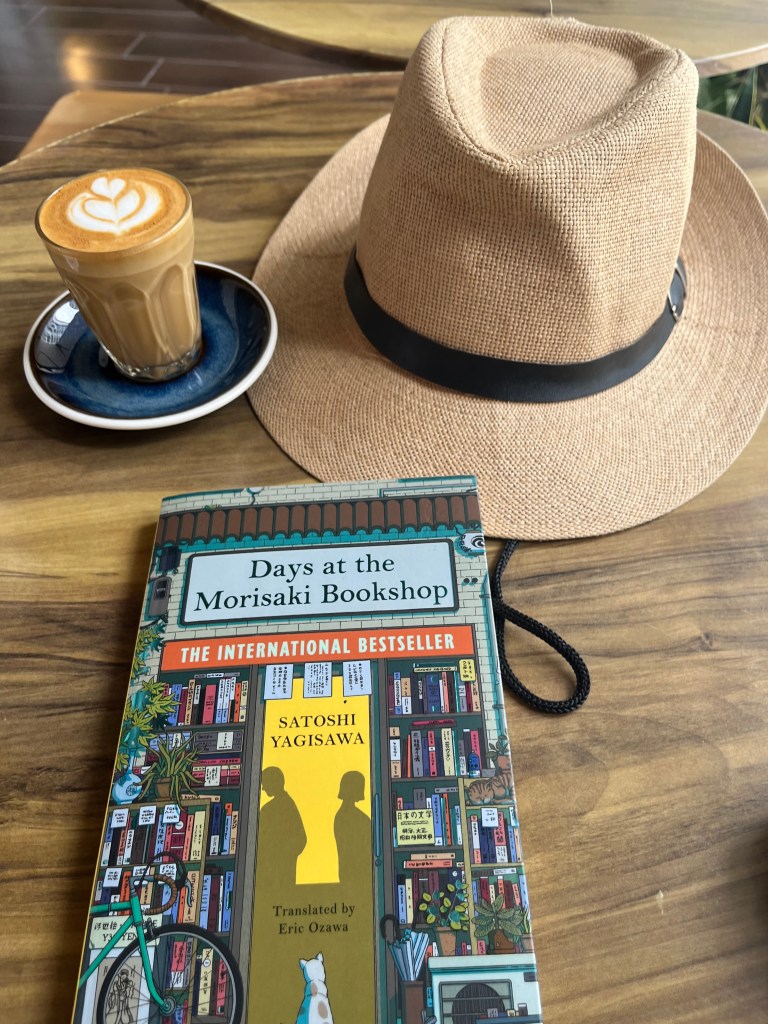
Days at the Morisaki Bookshop by Satoshi Yagisawa tells a story about healing power of books. It is a story about book lovers. One day Hideaki the boyfriend with whom Takako has been going out blurts out that he is getting married and not ‘Let’s get married’ or ” I want to get married’. He is getting married to a colleague in another department. Takako quits her job as she can no longer work in the same office as Hideaki who seems to think that they can still continue seeing each other for dinner.
Takako is twenty-five years old. She is from Kyushu and came to Tokyo for work after graduating. Now that she has lost her job, she spends her days sleeping. Her uncle Satoru invites her to go and stay with him in Jimbocho. He runs Morisaki Bookshop that has been in her family for three generations.He has taken over the bookshop that her great-grandfather started. It has been a decade since she last saw her uncle whom she was not that fond of. He is ‘unconventional and hard to figure out‘. She reluctantly accepts her uncle’s invitation to stay rent-free in the tiny room above the bookshop. She has never been to Jimbocho and she is surprised to see rows of bookshops on Yasukuni Street, the main avenue. Morisaki Bookshop specializes in literature of the modern era.Jimbocho is full of secondhand bookshops. According to Satoru, the neighbourhood houses ‘ the largest concentration of secondhand bookshops in the world. Most of the bookshops there deal primarily in one specific field or type of book. There are stores for scholarly books. There are stores that only handle scripts for plays. There are some more unusual shops that only deal in stuff like old postcards and photographs.’ Her uncle explains that the neighbourhood was a centre of culture in the Meiji era at the end of the 19th century and in that era a lot of schools were built there hence there were all those stores selling scholarly books.
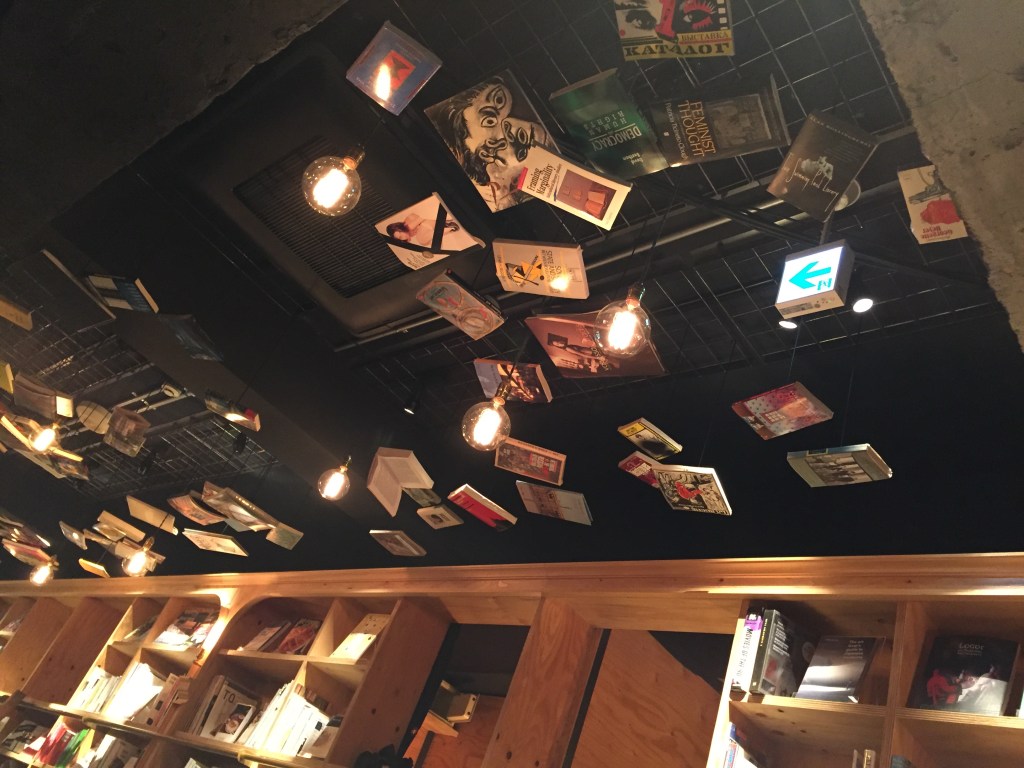
Takako was never a reader prior to coming to Jimbocho. One night, Satoru takes her out to a café and shows her around the neighbourhood. After talking to her eccentric uncle about his youth and how he feels after his wife Momoko left him five years ago , she feels strangely agitated and is unable to sleep . She decides to pick up a book. She closes her eyes and picks out Until the Death of the Girl by Saisei Murō. She is so absorbed in the book that she reads through the night. When she finishes reading it, she feels at peace. From then onwards, Takako discovers new worlds within the stacks of books. In the course of her stay, she gets to know her uncle and later her aunt who returns to the Morisaki Bookshop one day.The Morisaki bookshop has something to teach both her uncle and her about life, love and the healing power of books.
Days at the Morisaki Bookshop is Satoshi Yagisawa‘s debut novel. It won the Chiyoda Literature Prize. It was first published in 2010 and is translated from Japanese to English by Eric Ozawa. A movie entitled Morisaki shoten no hibi was made based on the book.
Days at the Morisaki Bookshop is a sweet tale about love and book people. As the translator writes in his note, Satoshi Yagisawa‘s novel is about ‘the many pleasures of reading: the joy of discovering a new author; the hedonism of staying up too late to finish a book; the surreptitious thrill of getting to know someone by reading their favourite novel ; and the freedom of walking into a bookstore and scanning the titles, waiting for something to catch your eye.’ Incidentally the translator met his wife, Nicole by chance in a bookstore.
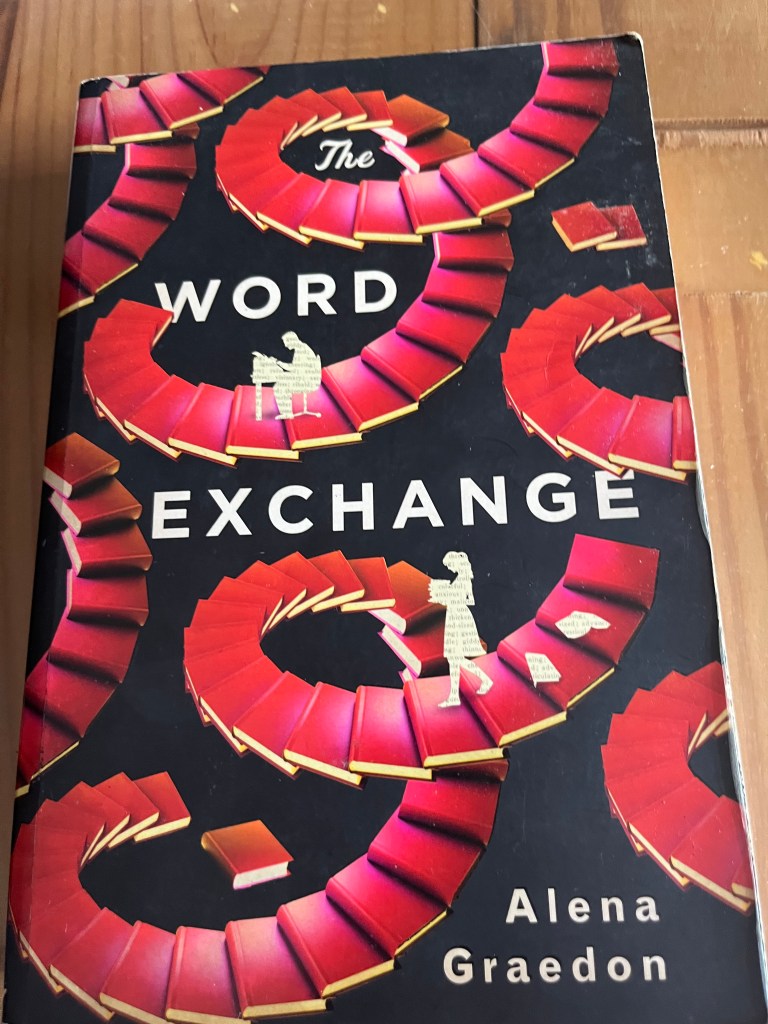
A decade ago I read The Word Exchange, a science fiction by Alena Graedon. Imagine a world where words get scrambled and language disappearing, as a result, thoughts and memories are in danger of becoming disposable. The fear can be real as we exchange texts by using abbreviation and our attention span is increasingly compromised as we comb through our electronic mailbox and respond to text messages via our mobile phones as well as performing all the tasks online et cetera. Words may not be enough to translate all that we think or feel but they remain necessary for communicating our thoughts, expressing our insights and most importantly, connecting with other human minds. Even with ebooks and online platforms, print is still here to stay to preserve the stories published throughout the centuries.
Here is something I wrote in December 2012 about reading. It is entitled The Magic of Words.
 Bookaholic Macchiato
The scenario in “The Word Exchange” sounds downright frightening. That book’s cover is wonderful, though 🙂 I agree with you about the magic of reading. Being immersed in a good book’s story is deeply pleasurable.
LikeLiked by 1 person
Hi Dave Thanks for reading the post.The Word Exchange is a cautionary tale. In the story handheld devices called Memes are relied upon to keep us in constant communication. The users do not commit the words they have learnt to their memory instead they relegate that chore to their Memes.Though the fiction is dystopia, it can happen in reality. As it is, we rely so much on our smartphones that supposedly free our memory space, instead we are caught up with multitasking online that might impact our ability to remember anything at all.
If only more people could appreciate the joy of reading.
LikeLike